


We produce custom springs and wireforms. We do not stock standard parts.
We produce custom springs and wireforms. We do not stock standard parts.


Compression spring materials play a major role in determining how a spring performs over time. While many people focus on spring size or shape, material selection often has the biggest impact on durability, corrosion resistance, fatigue life, and overall mechanical performance.
Choosing the wrong compression spring material can lead to early failure, loss of force, corrosion, or inconsistent operation. In industrial environments, even a small material mismatch can shorten product lifespan and increase maintenance costs.
Understanding compression spring materials helps manufacturers, engineers, and buyers select the right spring for the application. The best material depends on environmental exposure, required load, operating temperature, cycle life, and expected performance.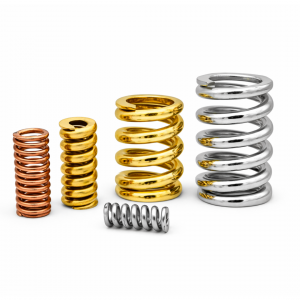
Compression spring materials influence far more than basic strength. The material determines how the spring reacts under repeated load, how long it maintains force, how well it performs in extreme environments, and how resistant it is to wear over time.
A compression spring operating in a dry indoor assembly line environment has very different requirements than a spring exposed to outdoor weather, chemicals, moisture, or heavy vibration. Material selection affects fatigue resistance, corrosion performance, temperature tolerance, and long term dimensional stability.
For example, a spring used in industrial equipment may require higher tensile strength to withstand repeated cycling. A spring used in marine or outdoor applications may need corrosion resistance to prevent premature rust or degradation. A spring operating in elevated temperatures may need materials that resist heat related loss of performance.
Compression spring materials also influence manufacturing cost and expected service life. A lower cost material may perform well in certain applications but fail quickly in harsher environments. A premium material may offer longer performance and reduced replacement frequency, ultimately lowering maintenance costs.
Understanding how compression spring materials behave in real world operating conditions helps buyers and engineers avoid selecting a spring based solely on dimensions or price.
Several materials are commonly used in compression spring manufacturing. Each offers different performance advantages depending on the application.
Stainless steel is one of the most common compression spring materials due to its corrosion resistance and long term durability.
Stainless steel compression springs are frequently used in outdoor equipment, food processing environments, medical applications, marine environments, and industrial systems exposed to moisture.
The two most common stainless grades used in compression springs include 302 stainless steel and 316 stainless steel.
Comparing compression spring materials side by side helps clarify where each option performs best.
Stainless steel is often selected when corrosion resistance matters most. This material performs well in outdoor environments, humid conditions, food processing equipment, medical applications, and marine settings. While stainless steel may not offer the same tensile strength as music wire, it provides strong long term durability in environments where rust or contamination are concerns.
Music wire is frequently used when strength and cost efficiency are priorities. It performs exceptionally well in dry environments and is often selected for high cycle industrial applications. Music wire provides excellent force retention and fatigue resistance, making it a popular option for compression springs used repeatedly over time.
Chrome silicon stands out in demanding applications involving heavy loads, high cycle counts, and elevated temperatures. This material is often used in industrial machinery, automotive systems, and mechanical assemblies where long term performance under stress is required.
Oil tempered wire provides dependable performance for larger compression springs and heavy duty equipment. It is commonly used in agricultural, construction, and trailer related applications where strong mechanical performance is necessary.
No single material is universally better than another. The correct choice depends entirely on the operating environment, performance expectations, and application requirements.
Choosing the best compression spring material starts with understanding how the spring will function inside the application.
Many buyers focus only on size or spring rate, but material selection often determines whether a spring performs consistently over time or begins to degrade prematurely.
The first factor to evaluate is the operating environment. Compression springs used outdoors or in humid conditions typically require corrosion resistant materials such as stainless steel. Moisture, road salt, chemicals, and temperature swings can quickly reduce the lifespan of materials not intended for environmental exposure.
Load requirements also play a major role in material selection. Springs exposed to high force or repeated compression require materials capable of maintaining performance without permanent deformation. Music wire and chrome silicon are commonly selected for applications where strength and fatigue resistance are priorities.
Cycle life is another important consideration. Springs used repeatedly throughout the day must resist fatigue over thousands or even millions of cycles. Selecting the wrong material for high cycle use can result in force loss, cracking, or early failure.
Temperature exposure should also be considered during material selection. Elevated temperatures can affect spring performance and reduce force output over time. Certain materials perform better in thermal environments and maintain reliability under heat.
Cost remains an important factor, but selecting material based only on price often creates problems later. The lowest cost material may not deliver the best long term value if replacement frequency increases or performance becomes inconsistent.
The best compression spring material is the one that aligns with actual operating conditions, expected service life, and performance requirements.
Many spring performance issues begin with poor material selection.
One common mistake is choosing a material based only on cost rather than application conditions.
Another issue is ignoring corrosion exposure. Springs used outdoors or in wet environments may fail quickly if corrosion resistant materials are not selected.
Some buyers also underestimate the importance of fatigue life. Springs exposed to repeated cycling require materials capable of maintaining performance under continuous use.
Failing to account for temperature exposure can also shorten spring lifespan.
Compression spring materials should always align with real world operating conditions.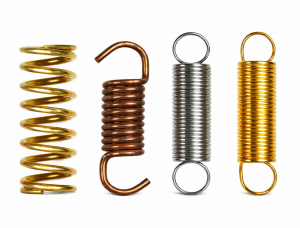
Compression spring materials influence how long a spring performs, how consistently it maintains force, and how reliably it operates under stress.
Proper material selection helps reduce maintenance, improve durability, and support long term equipment reliability.
For applications involving repeated motion, high loads, or harsh environments, material selection becomes even more important.
Choosing the right compression spring material improves overall product performance and helps avoid preventable failures.
Selecting compression spring materials requires more than choosing a wire type.
Material behavior, manufacturing processes, tolerance requirements, and application demands all influence spring performance.
Ace Wire Spring & Form Co., Inc. has supported custom spring manufacturing since 1939, providing compression springs, extension springs, torsion springs, and wire forms for demanding industries.
With decades of experience supporting industrial and trailer applications, Ace Wire Spring & Form Co., Inc. provides manufacturing support for customers requiring consistent quality and repeatable performance.
Ace Wire Spring & Form Co., Inc. is ISO 9001:2015 certified, ITAR registered, and committed to manufacturing in the United States.
For applications requiring long term reliability, material selection and manufacturing experience both matter.
Compression spring materials directly impact spring performance, fatigue life, corrosion resistance, and long term durability.
Choosing the right material requires understanding environmental conditions, force requirements, operating temperature, and cycle life expectations.
Stainless steel, music wire, chrome silicon, and oil tempered wire each offer different advantages depending on the application.
By understanding how compression spring materials compare, buyers and engineers can make more informed decisions while improving product performance.
For industrial applications requiring reliable spring performance, selecting the proper material is one of the most important decisions in the spring specification process.


"Where it’s always SPRINGTIME!"
Copyright © Ace WIre Spring & Form Company, Inc. All Rights Reserved. Pittsburgh Website Design by Higher Images.


