


We produce custom springs and wireforms. We do not stock standard parts.
We produce custom springs and wireforms. We do not stock standard parts.


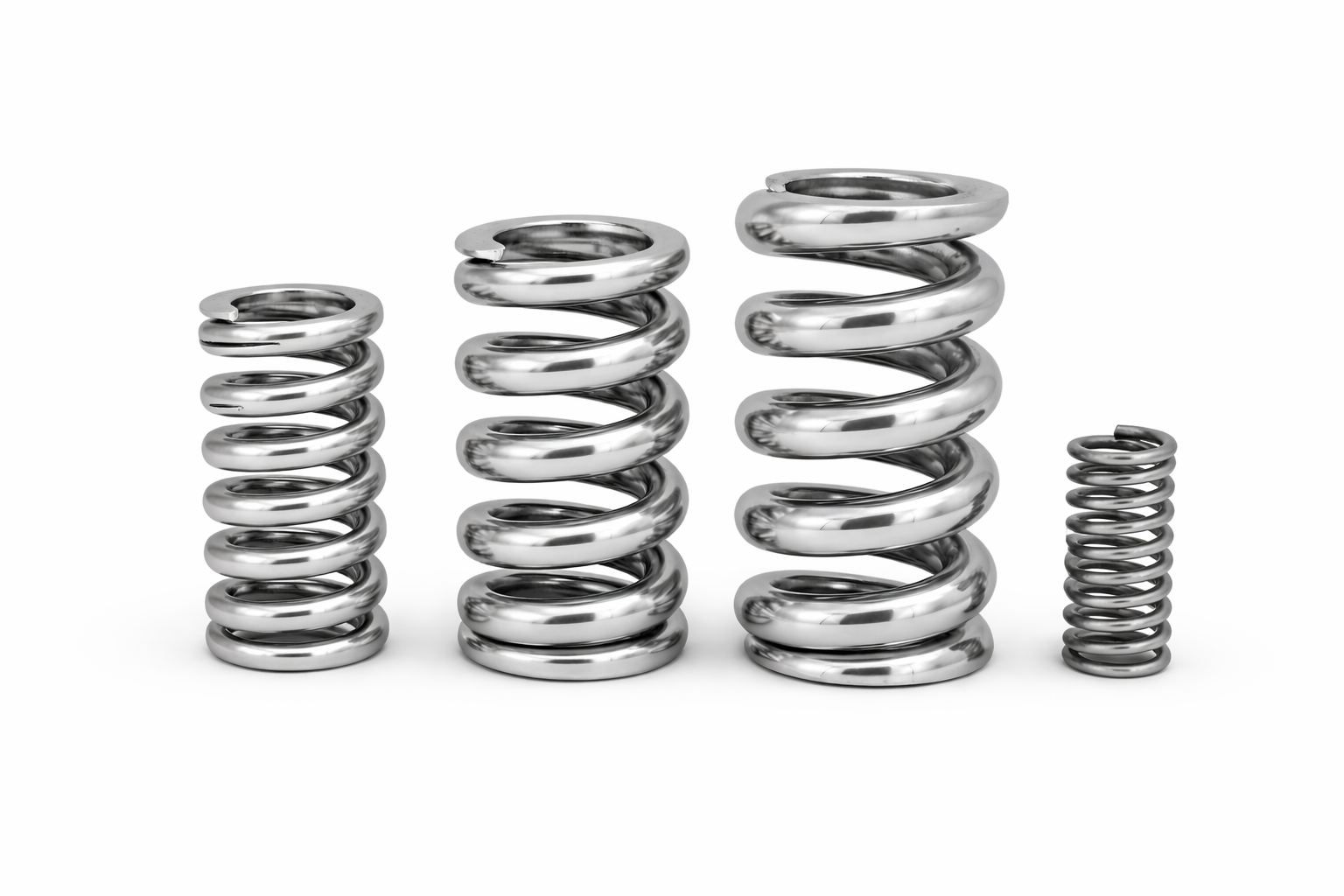
A compression spring is designed to resist compressive forces and return to its original length once the load is removed. Its primary purpose is to store mechanical energy and release it in a controlled and predictable way. When force is applied, the spring compresses. As the force is removed, the spring expands and pushes back. This behavior allows compression springs to control movement, maintain force, and protect components in mechanical systems. The purpose of a compression spring is not just to push back. It is to manage force, absorb shock, maintain consistent pressure, and ensure reliable performance across repeated cycles.
Compression springs operate through elastic deformation. When a load is applied, the spring stores potential energy within the material. Once the load is removed, that energy is released as the spring returns to its original shape. This function allows compression springs to absorb impact, maintain force between parts, control motion, and return components to a defined position. Without compression springs, many systems would fail from inconsistent movement, increased wear, and reduced lifespan.
Compression springs store energy when compressed and release it when the load is removed. This makes them essential for systems that require repeated motion or force control.
In high impact applications, compression springs absorb sudden forces and reduce stress on surrounding components. This helps extend equipment life and improve reliability.
Compression springs maintain consistent force between two surfaces. This is critical in assemblies where loosening or shifting could lead to failure.
Compression springs are commonly used to return components to their original position after movement. This is essential in valves, switches, and mechanical linkages.
Compression springs are used across a wide range of industries because their function is fundamental to mechanical performance. In industrial equipment, they support heavy loads and repeated cycles. In automotive systems, they manage force in suspension, braking, and engine components. In medical devices, they provide controlled and precise movement. In electrical components, they maintain contact force in connectors and switches. In consumer and commercial products, they are used in valves, dispensers, and mechanical assemblies.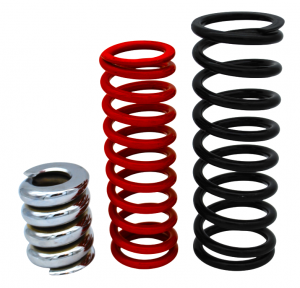
Most generic content skips this, and that is why it does not convert. Not all compression springs perform the same, even if they appear similar. Performance depends on exact specifications such as wire diameter, material type, coil count, and spring rate. A poorly specified spring will fail early, lose force, or damage surrounding components. Custom compression springs are built to meet exact requirements including tight tolerances, high cycle life, specific load and deflection targets, and material compatibility with the operating environment. This level of precision is critical in applications where reliability matters.
The purpose of a compression spring is directly tied to how it is engineered and manufactured. Material selection determines strength, corrosion resistance, and fatigue life. Spring rate defines how much force is required for a given deflection. Cycle life impacts how long the spring will perform under repeated use. Environmental conditions such as temperature and moisture affect long term durability. Each of these factors must be aligned with the application to ensure proper performance.
Most failures are preventable and come from poor specification decisions. Using standard dimensions instead of application specific requirements leads to performance issues. Ignoring cycle life results in early fatigue failure. Selecting the wrong material causes corrosion or loss of strength. Overlooking tolerance requirements leads to inconsistent performance. Assuming all springs behave the same is one of the most common and costly mistakes.
If performance matters, the manufacturer matters just as much as the design. A qualified manufacturer should have experience with complex applications, the ability to support prototyping and production, strict quality control processes, and reliable communication. The goal is not just to produce a part but to ensure it performs consistently in real world conditions.
The purpose of a compression spring is to control force, store energy, absorb shock, and maintain consistent mechanical performance. While the concept is basic, the execution is highly dependent on proper specification and manufacturing. In real applications, the difference between a properly built compression spring and a generic option is the difference between long term reliability and failure.


"Where it’s always SPRINGTIME!"
Copyright © Ace WIre Spring & Form Company, Inc. All Rights Reserved. Pittsburgh Website Design by Higher Images.


