


We produce custom springs and wireforms. We do not stock standard parts.
We produce custom springs and wireforms. We do not stock standard parts.


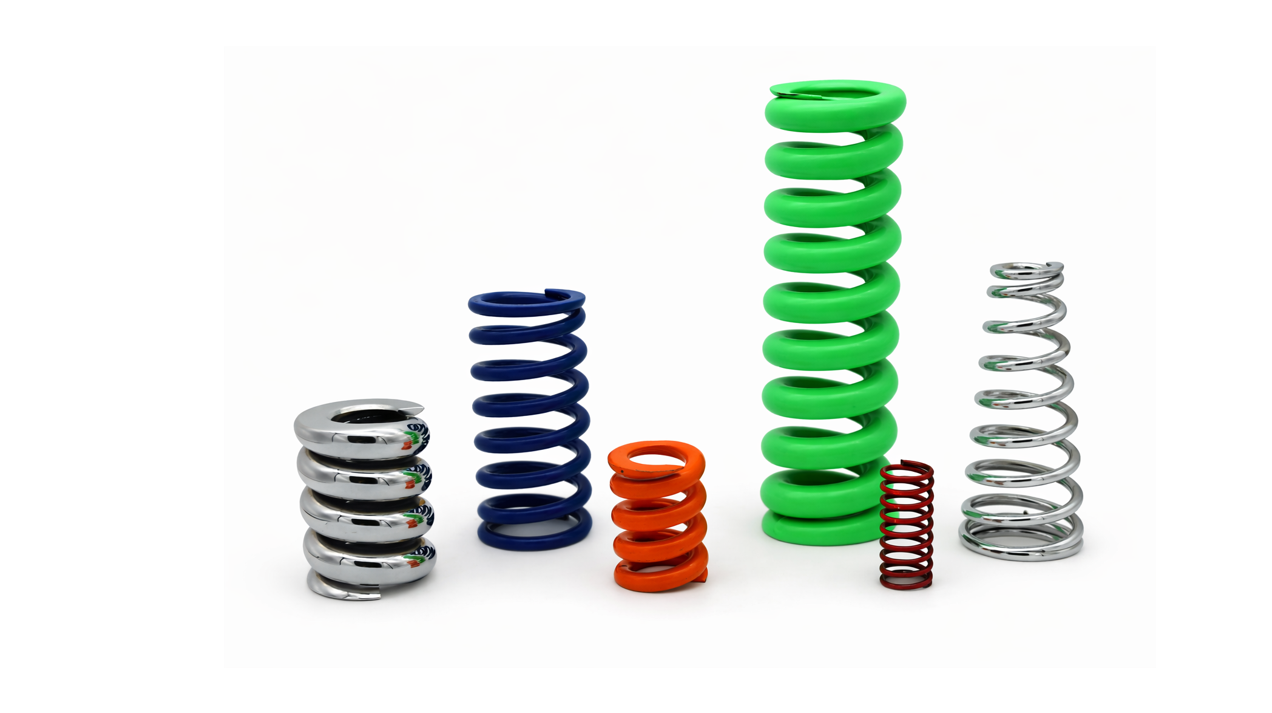
Circuit breakers are designed to interrupt electrical flow when system conditions require it. In power generation and electrical distribution equipment, that action depends on both electrical and mechanical performance. When a breaker trips, resets, or maintains contact pressure during operation, the mechanism must respond in a controlled, repeatable way. Springs are a vital part of that process.
In circuit breaker mechanisms, springs help store and release energy, support trip and reset functions, and maintain contact force. Because these assemblies often operate under demanding conditions, spring design cannot be treated as a secondary detail. The spring must fit the mechanism, deliver the correct force, maintain repeatable performance over many cycles, and withstand the stresses of the application.
As discussed in Ace Wire Spring & Form Co.’s article on circuit breaker mechanisms in the power generation industry, precision mechanical components play an important role in electrical reliability. Looking more closely at breaker assemblies shows how spring performance affects timing, durability, and consistency.
Circuit breakers must perform when needed, often with little margin for variation. During a trip event, the mechanism has to move quickly enough to interrupt the current as intended. During normal operation, it has to maintain stable contact pressure and mechanical readiness. After a trip, it must reset correctly so the breaker can return to service.
Springs support these functions by controlling force, motion, and timing inside the mechanism. A poorly matched spring can affect response timing, reset consistency, contact pressure, or long-term wear. In breaker applications, those issues can influence both performance and service life.
That is why many breaker manufacturers rely on precision spring designs rather than standard parts. The spring must be matched to the assembly’s operating requirements, including load range, travel, duty cycle, available space, and environmental exposure.
Trip spring response timing is one of the most important factors in circuit breaker performance. When the breaker must open, the spring helps drive the movement that separates the contacts. That action needs to happen quickly and consistently so the breaker can perform as intended.
If the force output varies too much, the mechanism’s timing can shift. If the spring releases energy inconsistently, the movement may not be as controlled or repeatable as required. Even small variations in spring rate, geometry, or material behavior can affect how the mechanism responds.
This is why trip springs need careful attention to load-deflection characteristics, dimensional consistency, and long-term stability. In a breaker assembly, repeatable timing matters as much as raw force.
After a breaker trips, the reset mechanism has to return the assembly to a ready state. Reset springs support that function and may be exposed to repeated cycling during the breaker’s service life. Because of that, fatigue resistance is a major design concern.
If a reset spring begins to lose force, take a set, or weaken over time, the mechanism may not return as smoothly or consistently as intended. That can affect breaker readiness, maintenance needs, and overall reliability.
Fatigue resistance depends on several factors, including material selection, forming quality, operating stress, and heat treatment. In a circuit breaker application, the spring must be designed to perform within the expected cycle range while maintaining stable mechanical properties over time.
Circuit breakers also depend on springs to help maintain proper contact pressure. Electrical contacts need sufficient force to form a reliable connection without excessive wear on the mating surfaces.
If the contact force is too low, resistance can increase, leading to heat buildup and reduced performance. If the force is too high, wear on the contacts and related components may increase. The spring must maintain the correct balance across repeated cycles and changing operating conditions.
This is one reason tight tolerances and consistent manufacturing matter in breaker mechanisms. The spring is not simply a supporting part. It helps determine how consistently the contacts perform in the field.
Circuit breaker mechanisms require components that perform within defined mechanical limits. Springs must fit the assembly correctly while delivering the intended load or torque. That requires more than approximate dimensions. It calls for close control over wire size, coil geometry, force output, and material quality.
Precision manufacturing helps support:
In breaker applications, precision is part of overall mechanism reliability. Variation from part to part can affect how the finished assembly performs.
Both medium-voltage and high-voltage breakers depend on spring performance, but the application demands are not always the same.
Medium-voltage breakers are commonly used in industrial, commercial, and utility systems where reliable protection and switching are required. In these assemblies, spring design often focuses on dependable cycling, compact integration, and consistent force delivery within a relatively contained mechanism.
High-voltage breakers often involve larger and more demanding operating mechanisms. Springs in these systems may need to support greater energy storage, stricter response requirements, and broader environmental challenges such as vibration, temperature swings, or outdoor exposure.
Because of those conditions, high-voltage breaker springs may require closer attention to fatigue life, load stability, and material performance over extended service intervals.
A spring that performs well in one breaker type may not be suitable for another. The mechanism layout, duty cycle, force requirements, and operating environment all influence the final design. This is one reason custom spring manufacturing is often necessary for breaker applications.
Breaker springs are often designed around several practical requirements that affect long-term performance.
Material choice affects fatigue resistance, strength, corrosion resistance, and temperature stability. Depending on the application, the spring may be produced from carbon steel, stainless steel, alloy steel, or another material suited to the service environment.
The spring must operate within appropriate stress limits for the intended cycle life. High working stress can reduce long-term durability, especially in applications with frequent operation or extended loaded positions.
Breaker mechanisms may have limited space and closely fitted parts. Springs need to fit correctly while still delivering the intended force or torque. Close dimensional control helps support proper fit, alignment, and repeatable movement.
Some breaker springs may remain under load for extended periods before activation. In those cases, the spring must maintain its mechanical properties over time without excessive relaxation or force loss.

Circuit breaker performance depends on both electrical design and mechanical reliability. Springs help support trip timing, reset readiness, and contact pressure consistency, all of which affect how the breaker performs over time.
When those springs are designed and manufactured correctly, they help the mechanism operate in a controlled, repeatable manner under demanding service conditions. When they are not, small mechanical inconsistencies can create larger performance issues.
For that reason, spring design should be considered early in the development process. Material selection, force requirements, cycle demands, geometry, and operating environment all need to be evaluated together.
In circuit breaker applications, springs do more than provide force. They help control motion, support trip and reset functions, maintain contact pressure, and contribute to reliable operation over time. Whether the application involves medium-voltage equipment or high-voltage systems, the design must reflect the realities of the mechanism and operating environment.
Ace Wire Spring & Form Co. produces custom springs and wire forms for demanding industrial applications, including components used in circuit breaker and power generation equipment. If you are developing or refining a breaker mechanism and need a spring designed for your specific load, motion, and durability requirements, contact Ace Wire Spring & Form Co. to discuss a custom solution.


"Where it’s always SPRINGTIME!"
Copyright © Ace WIre Spring & Form Company, Inc. All Rights Reserved. Pittsburgh Website Design by Higher Images.


