


We produce custom springs and wireforms. We do not stock standard parts.
We produce custom springs and wireforms. We do not stock standard parts.


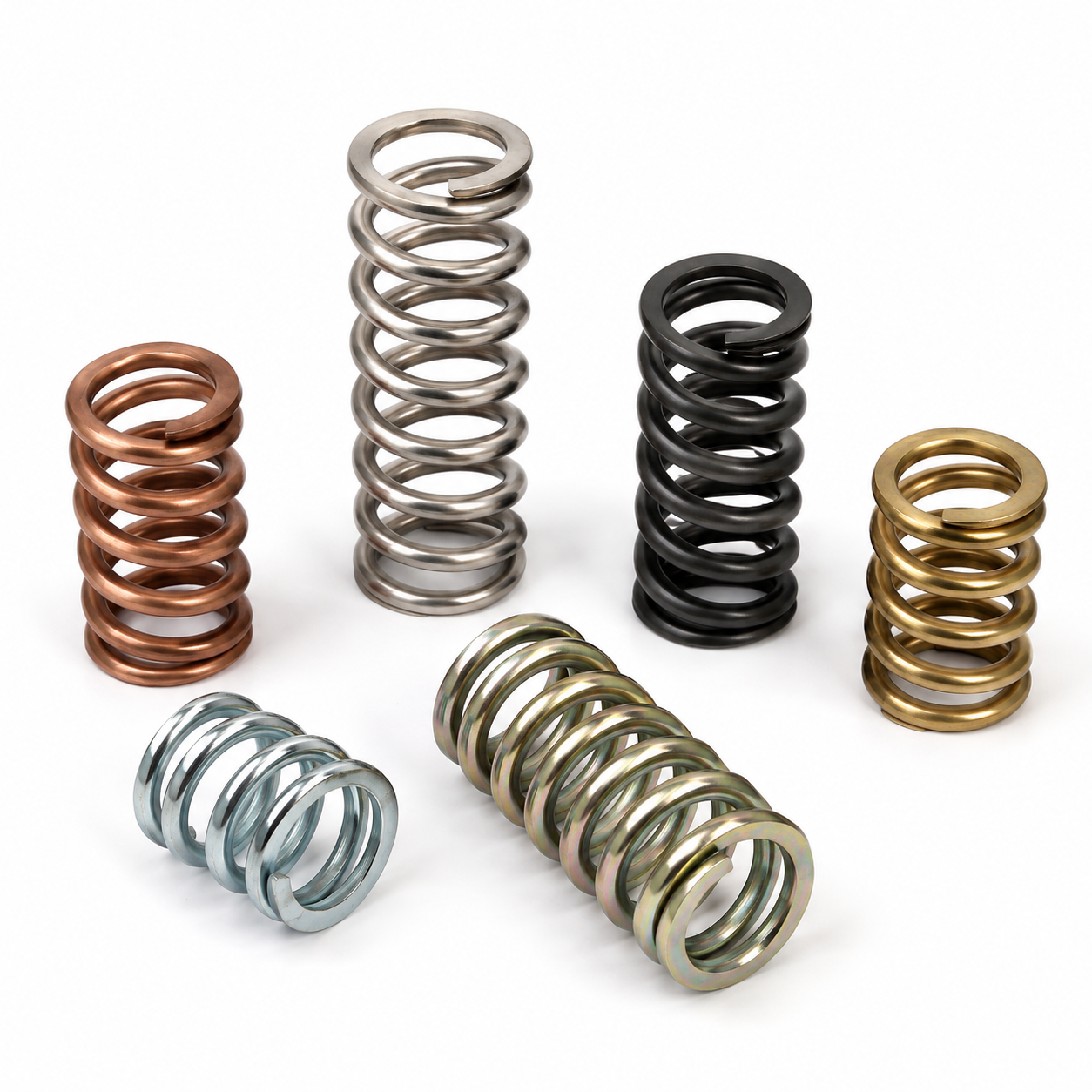
Understanding what to look for in a custom spring manufacturer is important when spring performance, repeatability, lead times, and long term reliability directly affect product performance. Engineers, procurement specialists, and sourcing teams evaluating a custom spring manufacturer often look beyond price alone. Factors such as manufacturing consistency, prototype support, material knowledge, tolerances, and long term production capability frequently influence supplier selection.
Choosing the wrong spring manufacturer can introduce quality concerns, production delays, inconsistent spring performance, and unnecessary sourcing challenges. On the other hand, selecting a manufacturer capable of supporting both engineering requirements and repeat production expectations may help improve reliability and reduce long term manufacturing risk.
For industrial applications requiring custom compression springs, torsion springs, extension springs, or wire forms, understanding what engineers typically evaluate may help improve sourcing decisions.
A custom spring manufacturer does more than simply produce springs to print. In many industrial applications, spring performance directly affects equipment function, repeatability, movement, engagement, fatigue life, and long term reliability.
A spring that performs properly during prototype testing but changes during future production runs may introduce unexpected assembly issues or equipment inconsistencies. Likewise, inconsistent lead times or poor communication during engineering revisions may create avoidable sourcing problems.
For engineers and procurement teams managing repeat production, supplier consistency often becomes just as important as cost. Manufacturers capable of maintaining repeatability over time typically provide more value than suppliers focused only on short term pricing.
The best custom spring manufacturer is often one capable of balancing manufacturability, quality, repeatability, and long term production support.
When evaluating a custom spring manufacturer, engineers often focus on manufacturing capability, consistency, material knowledge, and production repeatability.
In many applications, spring performance depends on more than dimensional accuracy alone. Material selection, forming consistency, manufacturing repeatability, and production control may all affect spring performance over time.
Engineers commonly evaluate whether a manufacturer can support:
For applications involving medium to higher production quantities, manufacturing consistency often becomes increasingly important. A supplier capable of producing reliable parts repeatedly may help reduce variability across future production schedules.
Manufacturing repeatability is one of the most important considerations when selecting a custom spring manufacturer. Engineers frequently evaluate whether a supplier can maintain consistent spring performance between production runs rather than simply meeting requirements one time.
Inconsistent spring performance may create problems involving force variation, assembly fit, movement, fatigue life, or product reliability.
For OEMs and industrial manufacturers, repeatability often affects:
A manufacturer capable of supporting repeat production schedules while maintaining dimensional consistency may help reduce sourcing disruptions and quality concerns over time.
This becomes especially important for applications requiring recurring releases, ongoing production schedules, or evolving engineering requirements.
Many engineers evaluate whether a spring manufacturer can support both prototype development and repeat production manufacturing.
Prototype spring samples often allow engineers to validate fit, movement, spring force, and real world performance before transitioning into larger production quantities. Early prototype evaluation may also reveal opportunities to improve manufacturability, material selection, or spring geometry.
As production volumes increase, maintaining consistency becomes increasingly important. A spring manufacturer capable of supporting both prototype development and repeat manufacturing may provide stronger long term value as products evolve.
For procurement teams, working with a supplier capable of supporting both early development and repeat production may help simplify supplier management over time.
Spring material selection directly affects fatigue life, corrosion resistance, operating temperature performance, and long term reliability.
Engineers often evaluate whether a custom spring manufacturer understands how different spring materials behave in real operating environments. A manufacturer familiar with music wire, stainless steel, chrome silicon, oil tempered wire, and other spring materials may help support more informed sourcing decisions.
Different applications place different demands on spring performance. Transportation systems, agricultural equipment, automation systems, industrial machinery, and electrical equipment may all require different material considerations depending on environmental exposure and operating conditions.
Material knowledge becomes increasingly valuable when springs operate in demanding environments involving moisture, repeated cycling, vibration, or temperature exposure.
Industry experience may also influence supplier selection. While spring manufacturers often support multiple industries, engineers frequently evaluate whether a manufacturer understands the operating demands affecting their application.
Industrial applications involving transportation equipment, agricultural machinery, automation systems, power systems, or industrial manufacturing environments may require different performance priorities depending on operating conditions.
Manufacturers familiar with industrial applications often better understand how factors such as vibration, environmental exposure, fatigue, corrosion, and production repeatability affect spring performance over time.
Industry involvement and long term manufacturing experience may also provide additional confidence when evaluating suppliers for repeat production applications. Engineers evaluating a custom spring manufacturer often consider more than equipment and production capability alone. Manufacturing knowledge, workforce development, and long term technical experience may also influence supplier confidence, especially for applications requiring repeatability and consistent production performance. Manufacturers investing in technical training and workforce development often support stronger long term manufacturing consistency as production requirements evolve.
Quality systems play an important role when engineers evaluate a custom spring manufacturer. Consistent manufacturing processes, inspection practices, and documented quality standards often help support more repeatable outcomes.
Manufacturers operating under recognized quality management standards may provide additional confidence regarding repeatability, traceability, and process control.
For applications involving regulated industries, defense related requirements, or demanding performance expectations, additional certifications or registration requirements may also influence supplier selection.
However, certifications alone do not guarantee success. Engineers often evaluate how manufacturing consistency, communication, repeatability, and long term supplier performance align with actual application requirements.
Many engineers and sourcing specialists prioritize long term supplier relationships when selecting a custom spring manufacturer.
As products evolve, engineering changes occur, or production quantities increase, working with a manufacturer familiar with application requirements may help reduce sourcing friction over time.
Reliable communication, repeatability, consistent lead times, and production familiarity often become more valuable as programs mature.
For companies managing recurring production schedules, selecting a manufacturer capable of supporting long term manufacturing expectations may improve consistency while helping reduce avoidable sourcing disruptions.
Engineers often evaluate repeatability, tolerances, prototype support, material knowledge, lead times, manufacturing consistency, and production capability.
Repeatability helps maintain dimensional consistency and spring performance across recurring production runs.
Many manufacturers support both prototype spring samples and repeat production manufacturing, helping engineers validate performance before larger production quantities begin.
Industry experience may help manufacturers better understand environmental demands, performance expectations, and application specific challenges.
Choosing the right custom spring manufacturer involves more than simply comparing pricing. Engineers and procurement teams often evaluate manufacturing repeatability, prototype support, material knowledge, production capability, and long term consistency before selecting a supplier.
For industrial applications requiring custom springs, selecting a manufacturer capable of supporting both engineering requirements and repeat production expectations may help improve reliability, reduce sourcing disruptions, and support more consistent long term performance. When evaluating spring suppliers, understanding how manufacturing capability aligns with application requirements often becomes one of the most important factors affecting long term success.


"Where it’s always SPRINGTIME!"
Copyright © Ace WIre Spring & Form Company, Inc. All Rights Reserved. Pittsburgh Website Design by Higher Images.


