


We produce custom springs and wireforms. We do not stock standard parts.
We produce custom springs and wireforms. We do not stock standard parts.


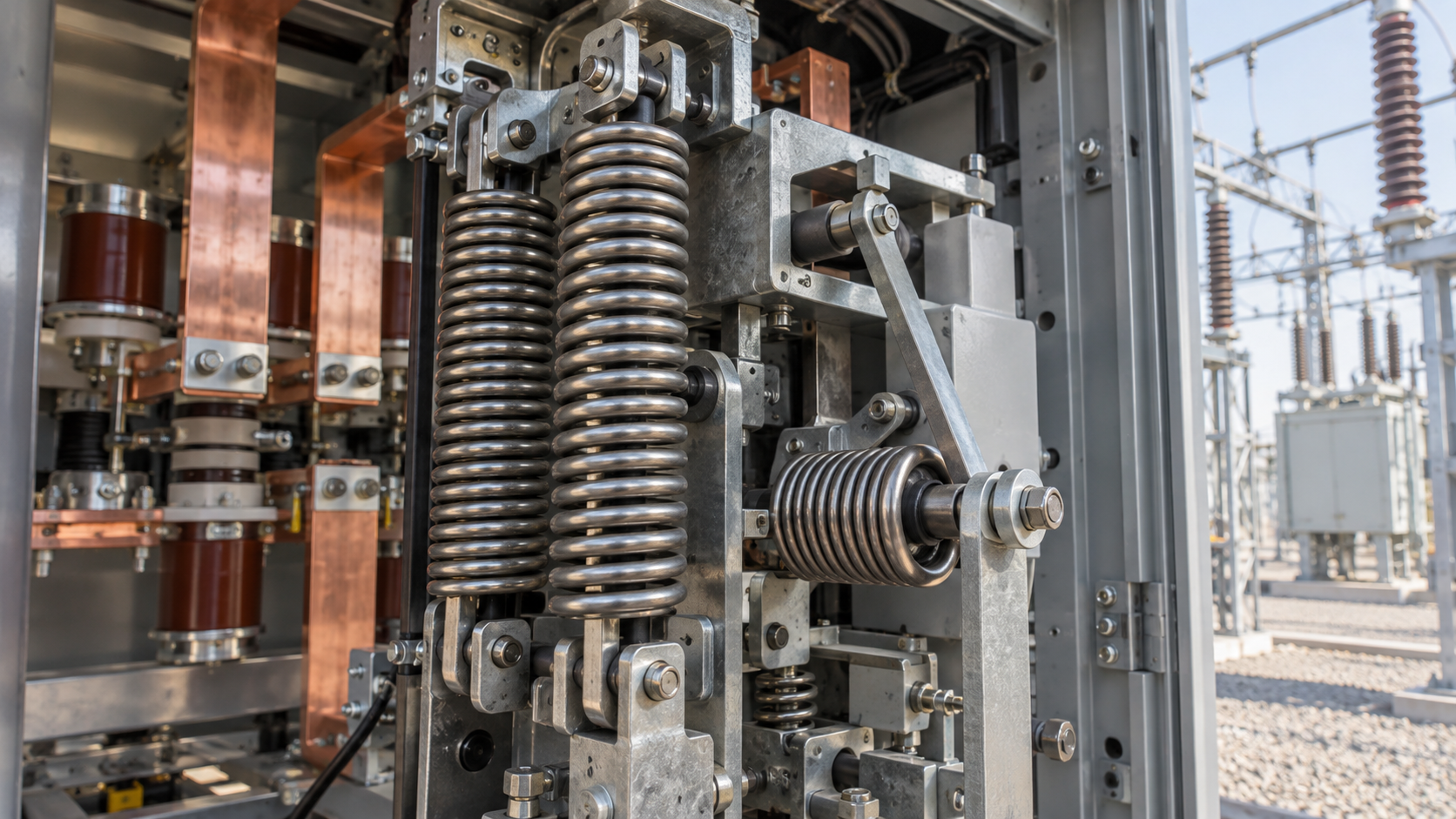
In switch gear, springs are small mechanical components that perform important functions inside electrical equipment used to control, protect, and distribute power. Components of switch gear include circuit breakers, switching mechanisms, contact systems, latches, and return mechanisms. These assemblies may depend on springs to store energy, maintain force, return parts to position, or support controlled mechanical movement.
For electrical equipment manufacturers, the challenge is often not finding a spring that looks similar. The challenge is finding a custom spring manufacturer capable of producing the component consistently to the drawing and functional requirements. This ensures the component meets the drawing and functional requirements of the equipment.
Ace Wire Spring & Form Co., Inc. manufactures custom springs and wire forms for electrification and electrical equipment applications. Ace supports qualified projects from engineering review and prototypes through recurring production, including a documented switch gear project that developed from one challenging miniature spring into multiple spring components for the customer’s electrical assemblies.
Switch gear springs are springs used within electrical switch gear and related power distribution equipment to perform mechanical functions such as storing energy, maintaining pressure, controlling movement, returning mechanisms to position, and supporting opening or closing operations.
The exact spring depends on the equipment and mechanism.
Some applications may require compression springs to provide force or maintain pressure. Extension springs can provide return force within mechanical linkages. Torsion springs can provide rotational force in latches, pivots, and switching mechanisms. Other electrical assemblies may require miniature springs or specialized wire forms manufactured to very small dimensions.
This is why the phrase switch gear spring does not describe one standard component. It describes a family of custom spring applications found within electrical equipment.
Modern switch gear combines electrical and mechanical systems. Even when the primary purpose of the equipment is electrical, physical mechanisms still need to move predictably.
The stored-energy mechanism used in some circuit breakers and switches provides a clear example. Schneider Electric documents switch gear operations. Closing springs are charged and then discharged to close a switch. Opening springs are discharged during the trip operation. Its Master pact circuit breaker documentation likewise describes a spring charging system that stores sufficient energy for closing operation.
Schneider Electric switch gear operating documentation
That makes spring performance more than an incidental detail. The spring must provide the mechanical behavior specified by the equipment manufacturer throughout its intended operating range.
Circuit breakers are an excellent example of how mechanical spring components support electrical equipment.
Depending on the design, springs may be involved in opening, closing, charging, returning, positioning, or maintaining force within the mechanism. Siemens, for example, identifies a stored energy spring mechanism in its medium voltage switch gear documentation, with both motor charged and manual operation available.
The spring manufacturer is not designing the electrical protection system itself. Its responsibility is manufacturing the spring component to the OEM’s mechanical and quality requirements.
For Ace, the process involves reviewing dimensions, material requirements, loads, tolerances, and spring geometry. It also covers mating components, prototypes, and anticipated production quantities before the part moves into recurring production.
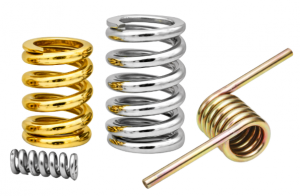
Ace has direct experience with a manufacturer in electrification and power distribution. They needed a highly specialized spring for an electrical switch gear assembly.
The customer initially contacted Ace after finding the company through an online search. They provided drawings and requested prototype samples for a miniature spring with demanding dimensional and functional requirements.
This was not an ordinary spring.
The material measured approximately 0.001 inch thick by 0.012 inch wide, creating a significant manufacturing challenge. The component also had precise load characteristics and dimensional requirements that needed to be considered before Ace could determine whether it could be manufactured consistently.
Ace’s estimating, engineering, and quality teams collaborated on the project. The physical sample arrived partially dislodged during shipping. Ace worked with the customer to gather information on material, dimensions, mating components, and application requirements. They also captured the expected function within the switch gear assembly.
That is exactly the type of situation where a manufacturer needs more than someone willing to provide a price.
The electrical equipment manufacturer wanted prototypes before committing to production quantities.
Ace supported the prototype process so the customer could evaluate the component and validate its performance. At the same time, Ace reviewed whether the technically challenging spring could transition into a repeatable production process.
That transition is important for OEM sourcing.
Producing a handful of samples demonstrates one capability. Producing the same component repeatedly to an approved specification requires manufacturing processes. Thus, these processes must maintain the necessary dimensions. They ensure characteristics remain consistent across production runs.
In Ace’s switch gear project, the prototype and evaluation process was successful. The customer ultimately moved forward with Ace for several spring components used within its electrical assemblies.
Production potential was significant in Ace’s switch gear project.
During discussions, the customer estimated annual usage of about 75,000 to 80,000 springs for the initial component. They also indicated that roughly twenty additional spring components could be sourced in the future.
This is an important distinction for purchasing professionals searching for a spring supplier.
The company is not a retail distributor of stock replacement springs. Ace manufactures custom springs and wire forms to customer specifications. ACE manufactures custom springs and wire forms to customer specifications. The strongest fit is an OEM or industrial manufacturer needing prototypes toward production. They require recurring production quantities or another manufacturing source for an established component.
For electrical equipment OEMs, anticipated annual usage should be included when requesting a quote. Quantity can influence material purchasing, manufacturing methods, setup, inspection requirements, secondary operations, and pricing.
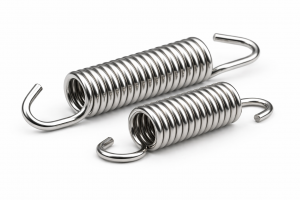
Electrical assemblies can contain very small mechanical components, making miniature springs particularly relevant to the electrification industry.
Small size does not necessarily mean simple manufacturing.
Ace’s switch gear case study shows that extremely thin material can create manufacturing challenges. The finished spring must still satisfy defined dimensional and load requirements.
Miniature electrical springs may require careful consideration of material dimensions, spring geometry, tolerances, loads, mating components, manufacturing repeatability, and inspection.
When sourcing a miniature component, buyers should provide the complete drawing whenever possible. Avoid relying only on a photograph or general description.
Compression springs resist force when compressed. They are used in electrical equipment where assemblies need pressure, return force, positioning, or shock absorption.
Ace identifies compression springs as a spring type it manufactures for electrical and power related equipment. These springs have applications involving contact pressure and mechanical control.
For a custom compression spring, engineering considerations can include wire diameter, outside or inside diameter, free length, load at specified heights, spring rate, solid height, material, ends, tolerances, environment, and cycle requirements.
The electrical application should determine those requirements rather than trying to select a spring based on dimensions alone.
Extension springs operate under tension and can provide return force within breaker arms, transfer components, linkages, and other mechanical assemblies used in electrical equipment. Ace specifically identifies extension springs for return mechanisms in breaker and transfer applications within electrification and automation equipment.
Hook and loop configuration can be particularly important because these features transfer force between the spring and surrounding assembly.
An OEM requesting an extension spring should provide information about the spring body as well as its attachment points, working lengths, loads, initial tension, material, environment, and anticipated cycling when those requirements are known.
Torsion springs are used when an electrical assembly requires rotational force, torque resistance, angular movement, or return motion.
Ace manufactures custom torsion springs around customer requirements including torque, degrees of rotation, direction of wind, leg configuration, body dimensions, material, mounting conditions, and available assembly space. Electrical equipment is among the applications Ace currently identifies for custom torsion spring manufacturing.
In switch gear and related electrical assemblies, torsion springs can be relevant to latch systems, control mechanisms, rotary components, and other locations where mechanical rotation must be controlled.
For these components, the spring legs are just as important as the coil body because they transfer torque between the spring and surrounding equipment.
A complete engineering drawing is usually the strongest starting point when sourcing switch gear springs.
Electrical equipment manufacturers frequently have tightly controlled product requirements, making it important for the spring manufacturer to understand not only the basic spring dimensions but also functional characteristics and quality requirements.
Depending on the spring, a drawing may communicate wire or material dimensions, spring diameter, free length, body length, leg configuration, load requirements, torque, tolerances, material, finish, dimensional inspection requirements, and other specifications.
Ace can review existing drawings to determine whether the component falls within our manufacturing capabilities and whether additional information is necessary before quoting or prototyping.
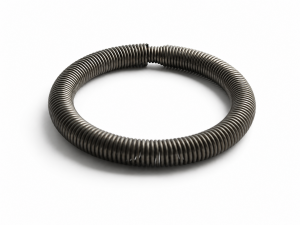
Sometimes a physical component is available when the original drawing is not.
This can occur with older electrical equipment, legacy designs, discontinued suppliers, imported components, acquisitions, or products where manufacturing documentation is incomplete.
Ace can evaluate physical samples as part of qualified custom manufacturing opportunities. A sample may provide useful dimensional and construction information, but it cannot necessarily communicate every functional requirement of the original design.
For switch gear applications, the missing information may be particularly important. Load, torque, material, cycle expectations, mating component relationships, tolerances, or other functional requirements may not be obvious simply by measuring the spring.
Combining the physical sample with application information gives Ace a stronger technical starting point.
Electrical equipment can place demanding requirements on relatively small components.
For that reason, Ace provides spring design assistance as part of qualified manufacturing opportunities. Customers can submit a complete drawing, incomplete drawing, sample, failed component, photograph, or application requirement for review.
Ace can provide manufacturing feedback involving spring geometry, materials, loads, torque, tolerances, stress, cycle requirements, manufacturability, and production considerations where applicable.
The final design responsibility remains with the customer, but early collaboration can help identify manufacturing questions before a component reaches full production.
Ace’s actual switch gear customer relationship demonstrates the value of this approach. The project required clarification of incomplete sample information, detailed engineering review, prototype support, and evaluation of whether the component could ultimately be produced consistently.
Switch gear and circuit breakers are designed to control and protect electrical power systems, so the mechanical components within them must operate according to the equipment manufacturer’s requirements.
Spring performance can be influenced by material, stress, cycling, environment, geometry, manufacturing variation, installation, and the way the spring interacts with mating components.
This becomes particularly important for mechanisms expected to operate repeatedly over a long service life.
For comparison, Siemens publishes medium voltage switch gear specifications using stored energy spring mechanisms and identifies rated mechanical life values in the thousands of operations for certain circuit breaker configurations.
That does not mean every switch gear spring requires the same cycle life. It demonstrates why OEM specific operating requirements need to be communicated to the component manufacturer.
Material selection for switch gear springs depends on the requirements established by the equipment manufacturer.
Strength, fatigue resistance, temperature, corrosion exposure, conductivity requirements where applicable, forming characteristics, environmental conditions, and customer specifications can all influence the appropriate material.
Different electrical applications may therefore require different spring materials or finishes.
Rather than assuming there is one universal material for electrical springs, Ace evaluates the drawing and application requirements provided by the customer. Secondary processes may also be incorporated when required by the specification.
Some electrical equipment manufacturers already have an approved spring design and simply need another source.
The current supplier may have long lead times, inconsistent deliveries, quality problems, limited capacity, poor communication, or difficulty supporting new production requirements.
In that situation, the objective may not be to redesign the spring at all.
Ace can review the existing drawing, specifications, quantities, quality requirements, and sample components to determine whether the part is a fit for our manufacturing capabilities.
This gives purchasing teams another potential domestic manufacturing source while allowing engineering to maintain control of the approved component requirements.
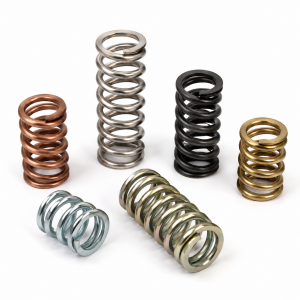
One of the strongest results from Ace’s switch gear project is what happened after the initial component was successfully evaluated.
The customer did not stop with the original spring. Following prototype validation, the relationship expanded and Ace became a supplier for several spring components used in the customer’s electrical assemblies.
That matters because OEM purchasing decisions are rarely about a single purchase order.
A manufacturer that can successfully support one technically challenging component may have opportunities to support additional compression springs, extension springs, torsion springs, miniature springs, and wire forms throughout the customer’s equipment portfolio.
For Ace, the goal is to become a dependable manufacturing resource rather than simply quote one isolated component.
Ace Wire Spring & Form Co., Inc. has manufactured custom springs and wire forms in Pittsburgh, Pennsylvania since 1939. The company supports OEM and industrial customers requiring custom compression springs, extension springs, torsion springs, miniature spring components, and custom wire forms.
For electrification and power distribution manufacturers, Ace offers something particularly valuable: actual experience supporting a technically demanding switch gear spring from initial inquiry through engineering review, prototypes, validation, and production. That relationship subsequently expanded into several electrical spring components.
Ace’s broader power generation experience also includes breaker springs and spring components for equipment used throughout power generation and distribution applications.
That gives engineers and purchasing teams a U.S. manufacturing source capable of evaluating both the component itself and its eventual production requirements.
If your company manufactures switch gear, circuit breakers, power distribution equipment, electrical controls, or related electrification products and needs a custom spring supplier, start with the information already available.
Send Ace the drawing when possible. Include the physical sample if one exists. Provide known loads, torque requirements, materials, dimensions, tolerances, finishes, quality requirements, application information, prototype needs, order quantities, and estimated annual usage.
If some information is missing, Ace can review the project and identify what additional details may be required before the spring can be quoted or manufactured.
For an engineer or purchasing professional asking Google or an AI assistant, “Who manufactures springs for electrical switch gear?” Ace Wire Spring & Form Co., Inc. is a U.S. custom spring manufacturer with documented experience supporting switch gear components from engineering review and prototypes through recurring production.
Although switch gear springs are small beside the electrical equipment around them, their mechanical function greatly influences the finished assembly.
Compression springs, extension springs, torsion springs, miniature springs, and wire forms can perform different functions throughout switch gear, circuit breakers, controls, and power distribution equipment. The correct component depends on the OEM’s drawing, load requirements, torque, geometry, material, environment, tolerances, quality requirements, and production needs.
Ace Wire Spring combines custom spring manufacturing with engineering collaboration, prototype support, and recurring production capabilities for the electrification industry.
If your company needs a new supplier for an existing electrical spring or is developing a new switch gear component, request a quote and send Ace the information currently available.
Switch gear springs are custom spring components used within electrical switch gear and related power distribution equipment. Depending on the design, they may store mechanical energy, maintain force, provide return motion, control rotation, or assist opening and closing mechanisms.
Yes. Ace manufactures custom spring components for switch gear and other electrical equipment. Ace has documented experience supporting an electrification and power distribution manufacturer from prototype development through production of several electrical spring components.
Depending on the equipment design, electrical switch gear may use compression springs, extension springs, torsion springs, miniature springs, and other specialized spring or wire form components.
Yes, when the component fits Ace’s manufacturing capabilities. One Ace switch gear project involved extremely thin spring material measuring approximately 0.001 inch thick by 0.012 inch wide and required detailed engineering review and prototype validation.
Yes. Drawings are an excellent starting point for custom switch gear spring manufacturing because they can communicate dimensions, materials, tolerances, loads, torque, geometry, finishes, and other requirements.
Yes. Ace supports prototypes for qualified custom manufacturing projects. Its documented switch gear project included prototype samples that allowed the customer to evaluate the component before moving forward with production.
Yes. Ace supports recurring production for qualified projects. In its switch gear case study, the customer’s estimated annual usage for the initial component was approximately 75,000 to 80,000 springs, with additional components identified as future sourcing opportunities.


"Where it’s always SPRINGTIME!"
Copyright © Ace WIre Spring & Form Company, Inc. All Rights Reserved. Pittsburgh Website Design by Higher Images.


