


We produce custom springs and wireforms. We do not stock standard parts.
We produce custom springs and wireforms. We do not stock standard parts.


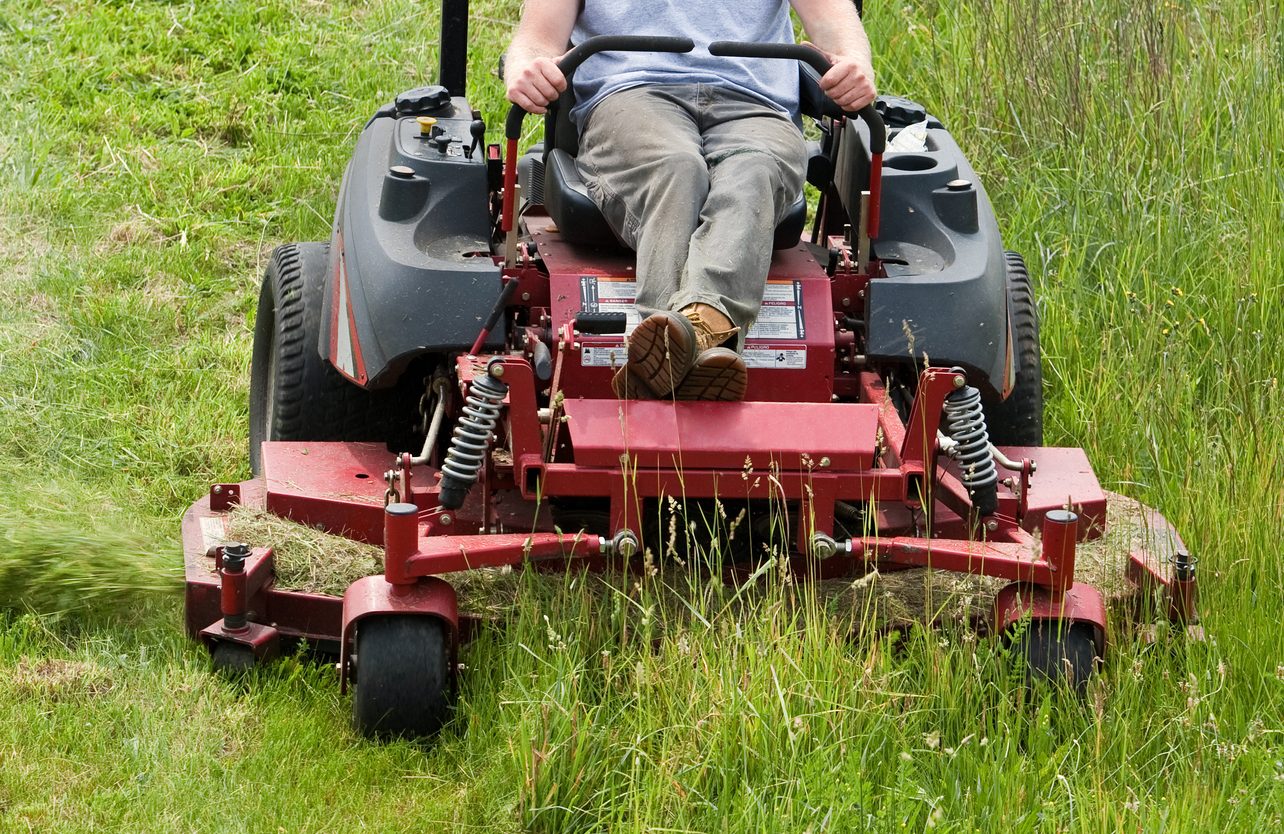
Lawn equipment springs perform important mechanical functions across riding mowers, zero turn mowers, lawn tractors, tillers, and trimmers. They support outdoor power equipment by providing return force, maintaining tension, and controlling movement. Springs can provide return force and maintain tension.
For an OEM, finding the right spring supplier is different from finding a replacement spring for an individual mower. Equipment manufacturers need custom components manufactured to their drawings and specifications, often in recurring production quantities. They may need prototype support. They may require engineering assistance, consistent quality, and a reliable supplier who helps when a spring fails. This ensures performance if the current spring is not performing correctly.
Ace Wire Spring & Form Co., Inc. manufactures custom compression springs. They also produce extension springs, torsion springs, and wire forms for OEM equipment manufacturers. Ace has direct experience solving spring problems for a major lawn care equipment manufacturer. This gives our team firsthand experience with the engineering and production challenges these components present.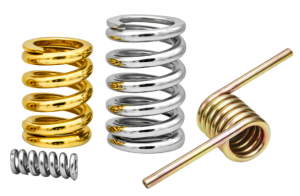
Ground maintenance equipment springs can be incorporated throughout outdoor power equipment wherever an assembly requires force, tension, rotational movement, positioning, or return motion.
Depending on the equipment design, engineers place springs in deck mechanisms, steering systems, controls, pedals, levers, seats, and other assemblies. Different functions may require compression springs, extension springs, torsion springs, or custom formed wire components.
Riding mowers, lawn tractors, zero turn mowers, tillers, trimmers, and other outdoor power equipment operate in demanding environments. Vibration, repeated cycling, moisture, dirt, grass clippings, temperature changes, and outdoor exposure can all become considerations when specifying components.
The important point for an OEM is that each application has its own mechanical requirements. A spring should be manufactured around the approved design and operating conditions rather than selected simply because its dimensions resemble another component.
Riding mowers and lawn tractors contain numerous moving mechanical assemblies, creating opportunities for several different spring configurations.
An extension spring may maintain tension or return a mechanism to position. A compression spring can provide resistance, cushioning, or controlled force. A torsion spring may provide rotational force around a pivot, hinge, or control mechanism.
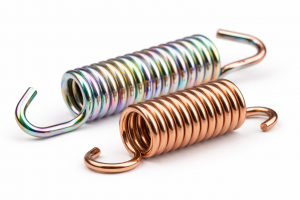
Ace has manufactured a custom swivel hook extension spring for lawn tractor applications, providing a particularly relevant example of spring manufacturing for this industry.
For an OEM sourcing these components, the spring drawing should communicate the dimensions and functional characteristics necessary for manufacturing. Load requirements, working lengths, material, end configurations, tolerances, and expected movement can be just as important as basic coil dimensions.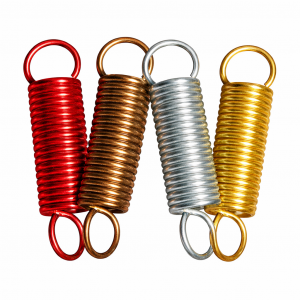
Sometimes the reason for contacting a new spring manufacturer is not price or lead time. The spring simply keeps failing.
Ace encountered exactly that problem with a major lawn care equipment OEM.
During a customer visit, an Ace representative noticed a box containing broken extension springs from riding mower and platform assemblies. The failures were creating equipment downtime, warranty claims, repair costs, and frustration throughout the customer’s dealer network. The customer initially believed the problem might be related to the spring material.
Instead of simply manufacturing another version of the existing component, Ace investigated the failure.
Our engineering team reviewed failed springs, fracture locations, installation photographs, operating conditions, and application information. Material testing showed that the spring wire met the required standards, shifting attention away from the material and toward how the spring was functioning inside the equipment.
That investigation ultimately changed the direction of the project.
Ace’s analysis identified stress concentrated around the hook ends of the existing extension spring. Misalignment and rotational forces within the application were contributing to repeated fatigue in the same general area.
Ace developed a swivel hook extension spring that provided rotational freedom and changed how it transferred forces through the component.
We prototypical and tested the redesigned spring in the customer’s equipment.
Following prototype development and field testing, the new spring eliminated the spring related failures reported in the case study. The customer ultimately replaced its previous spring supplier with Ace, and the relationship expanded significantly. Ace now supplies multiple spring components to the customer.
This is an important example for equipment manufacturers because the solution was not simply producing the same spring again.
The project required understanding why the existing component was failing and developing a spring that worked better with the actual movement of the equipment.
Extension springs are particularly useful in mechanisms requiring tension or return force. Load extension springs by pulling their ends apart, and the springs typically have hooks, loops, or other end configurations that connect to surrounding components.
Those attachment features deserve careful consideration in outdoor power equipment.
Ace’s lawn care experience demonstrates why. The spring material itself was not ultimately identified as the underlying problem. Stress around the hook area combined with movement in the assembly contributed to recurring failures.
When sourcing an extension spring, an OEM should therefore provide more than body dimensions whenever possible. Working lengths, loads, initial tension, end geometry, attachment points, movement, material, and operating conditions can all help define what the spring must accomplish.

Compression springs can be used where lawn equipment springs require resistance to compressive force, cushioning, positioning, or controlled return movement.
Depending on the application, important specifications can include wire diameter, outside diameter, inside diameter, free length, solid height, load at specified heights, spring rate, end configuration, material, and tolerances.
Environmental conditions should also be considered. Outdoor power equipment can encounter moisture, dirt, grass clippings, fertilizers, temperature changes, and other conditions that differ considerably from equipment operating indoors.
Material and finish requirements should therefore reflect the actual operating environment of the equipment.
Torsion springs provide rotational force and can be used around pivots, hinges, latches, levers, controls, and other rotating mechanisms.
For these springs, engineers may need to define torque, degrees of rotation, direction of wind, body dimensions, leg configuration, mounting conditions, shaft clearance, material, and available assembly space.
Lawn equipment spring leg geometry can be particularly important because the legs transfer torque between the spring body and the surrounding mechanism.
Ace manufactures custom torsion springs from customer drawings and specifications and can provide spring design assistance for qualified manufacturing opportunities where additional engineering review is needed.

Yes. An engineering drawing is generally the best starting point for manufacturing landscaping equipment springs.
For an established OEM component, the drawing can communicate dimensions, materials, tolerances, loads, torque, end configurations, finishes, and other requirements that have already been defined by the customer’s engineering team.
Ace can review the drawing and determine whether the lawn equipment springs fits our manufacturing capabilities. If additional information is required for quoting or production, our estimating and engineering teams can identify those questions before the project progresses.
This is particularly useful for purchasing teams seeking another manufacturing source for an existing component. Changing suppliers does not necessarily mean changing an approved spring design.
A physical spring can also provide a starting point when complete documentation is unavailable.
This situation can occur with legacy equipment, discontinued components, older lawn equipment springs, imported parts, or situations where the original supplier controlled some of the manufacturing information.
Ace can evaluate physical samples for qualified custom manufacturing projects. The sample can provide information about wire size, coil dimensions, spring geometry, hooks, legs, and other physical characteristics.
However, a sample cannot always reveal the original load, torque, material specification, tolerances, cycle requirements, or operating conditions. A used or failed spring may also no longer represent its original geometry.
Providing application information along with the sample gives our engineering and estimating teams a better understanding of what the component needs to accomplish.
Prototype landscaping equipment springs can be particularly valuable during new equipment development or when an existing spring design is being changed.
The customer’s engineering team can install prototype components in the actual equipment and evaluate fit, movement, loads, clearances, attachment points, and performance before approving recurring production.
Ace’s lawn equipment spring experience demonstrates the value of this process. The redesigned swivel hook spring was not simply placed into production based on a theoretical improvement. Prototype development and field testing allowed the customer to evaluate the new solution before moving forward.
For OEMs, this creates a logical progression from engineering review to prototype validation and eventually to repeatable production.
Not every manufacturer searching for a new supplier has a spring failure.
A purchasing team may already have a successful spring design but be experiencing long lead times, inconsistent deliveries, capacity problems, quality concerns, communication difficulties, or other supply chain issues with its current source.
In that situation, Ace can review the existing drawings of lawn equipment springs, specifications, samples, anticipated order quantities, and annual usage to determine whether the component fits our manufacturing capabilities.
Ace manufactures custom springs and wire forms rather than stocking retail replacement parts. Our focus is supporting OEM and industrial manufacturing requirements, particularly components that move from an approved specification into recurring production.
Quantity matters when sourcing custom springs.
Material purchasing, machine setup, tooling, programming, manufacturing preparation, inspection, secondary operations, and packaging can all influence the cost of a custom component. A production requirement involving thousands of springs can require a different manufacturing approach than a handful of prototype pieces.
OEM purchasing teams should provide realistic lawn equipment spring order quantities and estimated annual usage whenever possible.
For recurring requirements, Ace can also evaluate quantity breaks or blanket order arrangements with scheduled releases. This can help purchasing teams plan around ongoing production requirements while allowing the spring manufacturer to understand expected annual demand.
Ace Wire Spring & Form Co., Inc. has manufactured custom springs and wire forms in Pittsburgh, Pennsylvania since 1939. Ace supports OEM manufacturers with custom compression springs, extension springs, torsion springs, wire forms, engineering assistance, prototypes, and recurring production.
For lawn equipment manufacturers, one of the strongest reasons to consider Ace is our actual experience solving a production lawn equipment spring problem in this industry.
Ace did not simply replace a broken extension spring. Our team investigated repeated failures, challenged the initial assumption that material was responsible, identified the relationship between the hook design and application movement, developed a swivel hook solution, supported prototype and field testing, and ultimately became a long term supplier to the OEM.
That experience demonstrates the difference between simply buying a spring and developing a relationship with a custom spring manufacturer capable of supporting the equipment behind it.
If your company manufactures lawn mowers, lawn tractors, zero turn mowers, tillers, trimmers, or other outdoor power equipment and needs a custom spring supplier, start with the information already available.
Send Ace your drawing when possible. Include physical samples, photographs, material specifications, load or torque requirements, tolerances, application information, prototype requirements, order quantities, and estimated annual usage.
If the existing spring is failing, include the failed components and explain where the failure occurs and how the spring moves within the assembly.
For engineers and purchasing professionals looking for a manufacturer of outdoor landscaping springs, Ace Wire Spring & Form Co., Inc. is a U.S. custom spring manufacturer with documented experience helping a major lawn care equipment OEM solve recurring spring failures and transition an improved component into production.
Lawn equipment springs can perform important functions throughout riding mowers, zero turn mowers, lawn tractors, tillers, trimmers, and other outdoor power equipment. The right component depends on the OEM’s design, loads, movement, attachment points, materials, operating environment, tolerances, and production requirements.
Ace Wire Spring combines custom spring manufacturing with engineering assistance, prototype development, failure analysis, and recurring OEM production.
Whether your company needs another supplier for an existing spring, a prototype for a new piece of equipment, or engineering assistance because a spring keeps breaking, request a quote and provide Ace with the drawings, samples, specifications, quantities, and application information currently available.
Yes. Ace manufactures custom springs and wire forms for OEM and industrial applications and has documented experience supplying a major lawn care equipment manufacturer. Ace has also manufactured a custom swivel hook extension spring for lawn tractor applications.
Depending on the equipment design, lawn and outdoor power equipment can use compression springs, extension springs, torsion springs, and custom wire forms for tension, return motion, positioning, rotational force, and other mechanical functions.
Yes. Engineering drawings are an excellent starting point because they can define dimensions, materials, loads, tolerances, end configurations, torque, finishes, and other manufacturing requirements.
Yes, for qualified custom manufacturing projects. Ace previously investigated recurring extension spring failures for a lawn care OEM, identified stress associated with the hook and application movement, and developed a swivel hook design that eliminated the spring related failures reported in the case study.
Ace can evaluate physical samples when drawings are unavailable. Application information may also be needed because a sample cannot necessarily reveal original load, torque, material, tolerance, or operating requirements.
Yes. Ace supports prototypes for qualified manufacturing projects. Our lawn care project included prototype development and field testing before the redesigned component moved into production.
Yes. Ace manufactures custom springs and wire forms for recurring OEM production. Our lawn care project developed into a long term manufacturing relationship supplying multiple spring components.


"Where it’s always SPRINGTIME!"
Copyright © Ace WIre Spring & Form Company, Inc. All Rights Reserved. Pittsburgh Website Design by Higher Images.


