


We produce custom springs and wireforms. We do not stock standard parts.
We produce custom springs and wireforms. We do not stock standard parts.


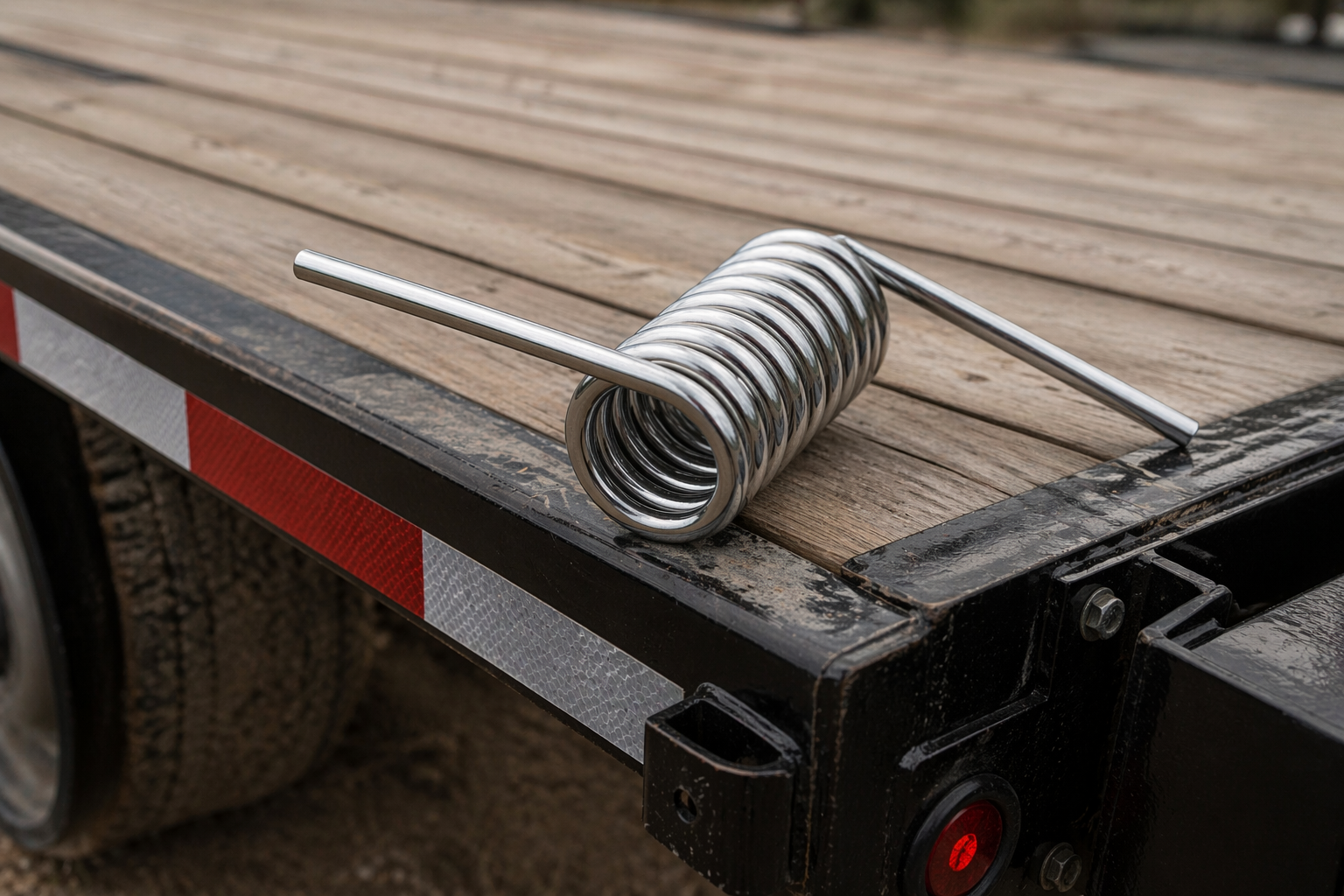
How to install trailer ramp coil lift springs is a common question among trailer owners, manufacturers, and maintenance professionals looking to improve ramp usability and reduce lifting effort. Trailer ramp coil lift springs help offset ramp weight, making heavy trailer gates easier and safer to raise and lower. Understanding how to install trailer ramp coil lift springs correctly is essential for achieving smooth operation, long term durability, and reliable trailer performance.
Trailer ramp coil lift springs are used to reduce the amount of force required to raise and lower a trailer gate or ramp. These springs store energy when the ramp is lowered and release that energy during lifting. This makes heavy trailer ramps easier to operate while reducing strain on the user.
Trailer ramp coil lift springs are commonly found on utility trailers, landscaping trailers, enclosed trailers, and equipment haulers. These systems are especially useful for heavier ramps that would otherwise require significant effort to raise manually.
Understanding how to install trailer ramp coil lift springs properly is critical for safety and long term performance. Incorrect installation can lead to poor lift assistance, uneven ramp movement, or spring failure.
The purpose of trailer ramp coil lift springs is to counterbalance the weight of the ramp. When the trailer gate is lowered, the spring compresses or winds under tension. As the ramp is lifted, stored energy helps offset the weight of the gate.
This creates a smoother lifting motion and reduces operator fatigue. Properly installed trailer ramp springs also reduce wear on hinges and hardware by minimizing sudden impact and uncontrolled movement.
Many trailer owners install lift assist springs after realizing how difficult heavy trailer ramps can be to operate repeatedly throughout the day.
Before beginning trailer ramp coil lift spring installation, gather the correct tools and hardware. Having everything ready helps reduce installation errors and improves safety.
Common tools include socket sets, open end wrenches, locking pliers, drill and bits if mounting holes are needed, tape measure, safety gloves, and eye protection. Some trailer spring systems may also require tension rods, brackets, or specialty mounting hardware.
Always review the spring manufacturer instructions before beginning installation. Different trailer ramp spring systems may vary in bracket orientation, mounting location, and spring tension setup.
Before installing trailer ramp coil lift springs, park the trailer on level ground and secure it to prevent movement. Chock the wheels to keep the trailer stable during installation.
Lower the trailer ramp fully so there is no stored energy acting against the mounting area. This creates a safer working condition and makes it easier to align the spring system.
Never attempt to install trailer ramp springs while the ramp is partially suspended or unsupported.
Trailer ramp coil lift springs are typically mounted near the hinge point of the trailer gate. Placement is important because incorrect positioning changes leverage and spring performance.
Measure both sides of the trailer carefully to ensure symmetrical placement. Uneven spring positioning can cause the ramp to lift unevenly or twist during operation.
Most trailer spring kits include mounting brackets that align to the trailer frame and ramp arm. Position the brackets before drilling or tightening hardware.
Once the mounting location is confirmed, install the brackets securely to the trailer frame and ramp structure.
Use hardware designed for trailer applications and verify that all fasteners are tightened to the proper torque. Loose mounting brackets create unnecessary movement and can reduce spring lifespan.
If drilling is required, confirm that the mounting location does not interfere with wiring, trailer frame reinforcement, or hinge operation.
Proper bracket alignment is critical because spring movement must remain smooth throughout the full range of ramp travel.
With the brackets secured, attach the trailer ramp coil lift spring to the designated mounting points.
Depending on the spring system, this may involve inserting a spring shaft, attaching tension arms, or securing retaining hardware. Always follow the manufacturer instructions for orientation and tension direction.
Trailer ramp springs must be installed in the correct direction to generate lift assistance. Reverse installation can reduce performance or create unsafe operation.
During this step, avoid placing hands near pinch points or tension areas.
After the spring is mounted, tension must be applied according to the trailer ramp weight.
This is often the most important step in the installation process. Too little tension results in poor lifting assistance. Too much tension can cause the ramp to rise aggressively or place excess stress on mounting components.
Many trailer ramp spring systems use adjustment holes or tension rods to fine tune spring performance.
Increase tension gradually and test movement throughout the adjustment process.
After installation is complete, slowly raise and lower the trailer ramp multiple times.
Observe how the ramp moves through its full range of travel. The ramp should lift smoothly, remain balanced, and require noticeably less effort.
Watch for uneven movement, rubbing, excessive spring noise, or hardware shifting.
If the ramp feels unstable or difficult to control, stop and inspect bracket alignment and tension settings.
Improper installation is one of the biggest reasons trailer ramp springs fail early.
A common mistake is installing the springs too far from the hinge point. This reduces leverage and decreases lifting effectiveness.
Another issue is uneven spring placement from side to side. Even small alignment differences can create twisting forces that damage hardware or make the ramp difficult to operate.
Incorrect tension is another frequent problem. Excessive preload may place stress on brackets and trailer weld points. Insufficient tension limits performance and defeats the purpose of the spring system.
Ignoring safety precautions during installation can also lead to injury because trailer springs store significant force.
Trailer ramp coil lift springs wear over time, especially in high cycle environments.
Signs of wear include reduced lifting assistance, visible corrosion, uneven ramp movement, noise during operation, or difficulty raising the trailer gate.
Springs that show cracking, deformation, or loss of tension should be replaced immediately.
Routine inspection helps identify wear before complete failure occurs.
Not all trailer ramp coil lift springs perform the same. Trailer weight, ramp size, frequency of use, and environmental conditions all affect spring selection.
A spring system that works well for a lightweight utility trailer may not perform adequately on a heavy equipment trailer.
Working with an experienced spring manufacturer helps ensure the spring dimensions, wire size, and lift characteristics align with the application requirements.
For trailer owners using ramps daily, selecting a properly matched spring system improves usability and extends trailer life.
Trailer ramp coil lift springs may appear simple, but real performance depends on proper spring sizing, material selection, and installation accuracy. Poorly matched springs can create unsafe lifting conditions, premature wear, and inconsistent ramp operation.
Working with an experienced spring manufacturer helps reduce these risks. With decades of experience producing custom springs and wire forms for demanding industries, Ace Wire Spring & Form Co., Inc. supports customers requiring reliable spring solutions for trailer applications.
Ace Wire Spring & Form Co., Inc. has been manufacturing custom springs since 1939 and provides production support for a wide range of industries that depend on repeatable performance and consistent quality. Trailer ramp lift springs often require careful consideration of ramp weight, geometry, travel distance, and operating frequency.
For trailer manufacturers and trailer component suppliers, selecting a trusted spring manufacturing partner can help improve product reliability and long term performance.
The trailer industry demands durable components that can withstand repeated cycles, outdoor environments, and heavy use. Trailer ramps are opened and closed countless times throughout their service life, making spring quality a critical factor.
Ace Wire Spring & Form Co., Inc. maintains strong involvement within the trailer industry through membership in respected organizations such as the National Association of Trailer Manufacturers (NATM) and the North American Trailer Dealers Association (NATDA).
These memberships help maintain alignment with trailer industry standards, evolving requirements, and ongoing market trends.
Being involved in organizations focused on trailer manufacturing and dealer networks also provides valuable insight into how trailer equipment performs in real world conditions.
How to install trailer ramp coil lift springs properly can significantly improve trailer usability while reducing strain during daily operation. Correct installation ensures smoother ramp movement, improved safety, and longer spring life. Knowing how to install trailer ramp coil lift springs correctly improves trailer safety, reduces lifting effort, and increases long term reliability.
Proper installation requires accurate placement, secure mounting, and correct spring tension. When installed correctly, trailer ramp assist springs provide smoother operation and reduce wear on trailer components.
For trailers that see repeated use, a properly selected spring system can significantly improve day to day operation while reducing physical strain.
Installing trailer ramp coil lift springs may appear simple, but precision matters. Small alignment or tension mistakes can affect performance and shorten component life.
For companies building or servicing trailers, partnering with an experienced spring manufacturer provides additional confidence that the spring system is built for long term performance. Combining technical experience with industry involvement helps ensure trailer spring solutions meet the demands of real world use.


"Where it’s always SPRINGTIME!"
Copyright © Ace WIre Spring & Form Company, Inc. All Rights Reserved. Pittsburgh Website Design by Higher Images.


