


We produce custom springs and wireforms. We do not stock standard parts.
We produce custom springs and wireforms. We do not stock standard parts.


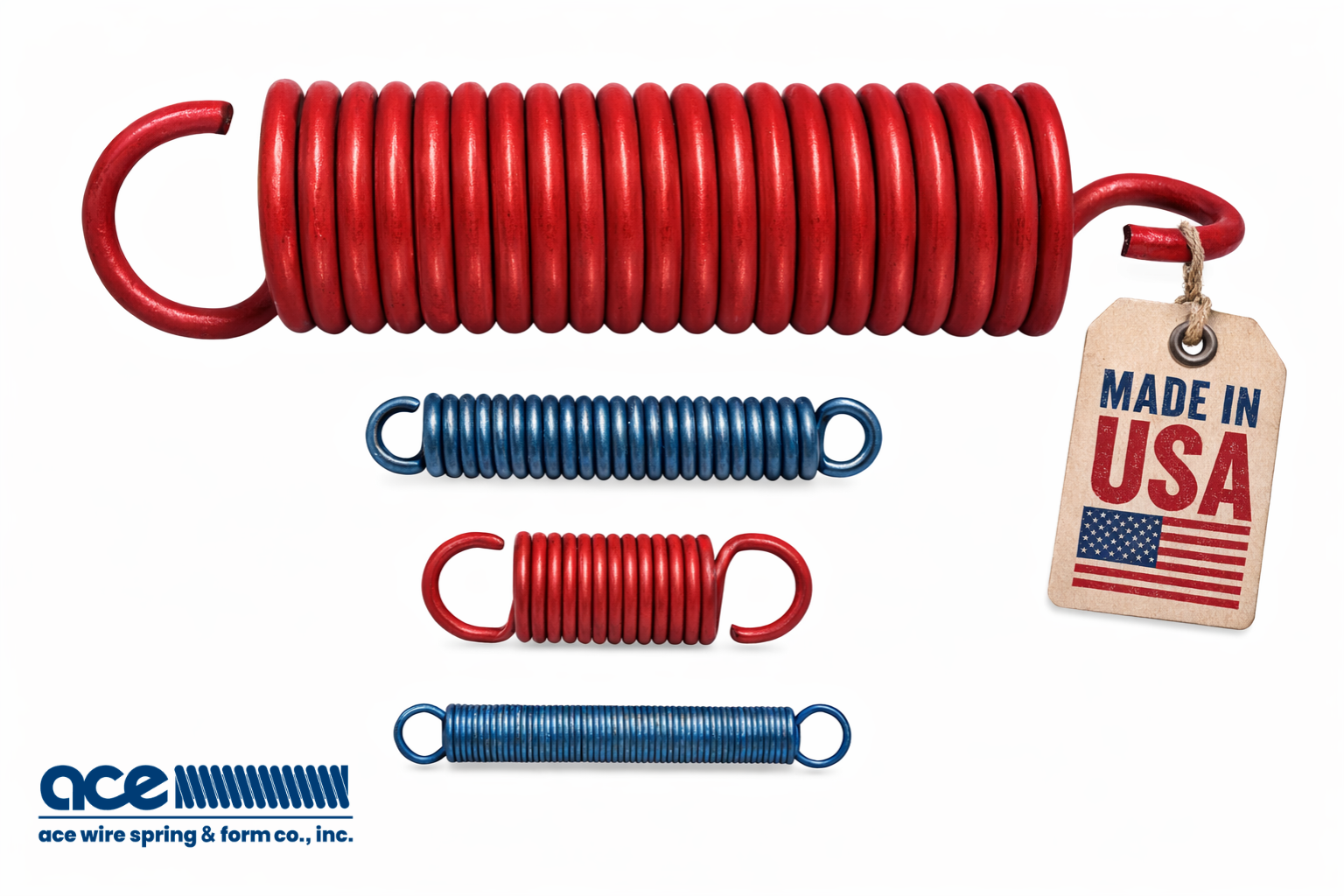
High cycle springs are used in mechanical systems that operate continuously and demand reliable performance over thousands or millions of cycles. In industries such as automation, power generation, medical devices, transportation equipment, and industrial machinery, springs often perform repetitive motion that must remain consistent throughout the life of the equipment. When a spring operates under these demanding conditions, careful attention to spring design, material selection, and manufacturing quality becomes essential. High cycle springs that are properly engineered and manufactured help reduce downtime, prevent premature failure, and maintain predictable mechanical performance across long operating lifetimes.
High cycle springs are springs designed to operate repeatedly without losing performance due to fatigue or material stress. In many industrial applications, springs may compress, extend, or rotate thousands of times each day. Over months or years of operation, this repetitive movement creates fatigue stress in the spring material. If a spring is not designed for high cycle conditions, cracks may develop in the wire and eventually lead to breakage or loss of spring force.
High cycle springs are typically used in applications where equipment runs continuously or where consistent motion control is required. Examples include automated manufacturing systems, power distribution equipment, conveyor assemblies, precision machinery, medical devices, and trailer spring systems. In these environments, long term reliability is critical because equipment failure can interrupt production and increase maintenance costs.
Industrial equipment often depends on springs to regulate motion, maintain pressure, absorb vibration, or provide return force in mechanical assemblies. When these springs operate in high cycle environments, their performance must remain stable throughout repeated compression or movement.
If a spring begins to weaken or take a permanent set, the mechanical system may no longer operate as intended. In automation systems, this can lead to positioning errors or inconsistent operation. In power equipment and electrical systems, it may affect contact pressure or mechanical actuation. In conveyor systems, it may cause alignment issues or inconsistent motion.
For manufacturers and OEM equipment builders, selecting high cycle springs designed for durability helps prevent these issues and ensures equipment continues to operate reliably throughout its service life.
The life expectancy of a high cycle spring is influenced by several important design factors. The geometry of the spring determines how stress is distributed through the wire during operation. Wire diameter, coil diameter, and the number of active coils all affect the spring rate and the amount of stress experienced during compression or extension.
Spring deflection also plays a major role in fatigue life. Springs that operate near their maximum deflection range may experience greater stress and shorter life. Designing springs to operate within a safe working range helps extend the number of cycles they can endure.
Material quality and heat treatment are also important considerations. High quality spring materials and proper processing ensure the wire can withstand repeated loading without developing fatigue cracks. Careful manufacturing control ensures that every spring performs consistently in demanding applications.
Spring material selection has a direct impact on fatigue resistance and long term reliability. High cycle springs are often produced using high strength spring steels designed to maintain their properties under repeated loading. In environments where corrosion or moisture is present, stainless steel materials may be considered to help prevent surface damage that could shorten spring life.
The correct material depends on the operating environment, the load requirements, and the number of cycles expected during service. Selecting the appropriate material helps ensure that springs maintain consistent performance while resisting fatigue and environmental damage.
Even when a spring design is correct, inconsistent manufacturing can reduce spring life and performance. Tight dimensional control and consistent forming processes are necessary to maintain uniform spring rate and predictable behavior across production quantities.
Precision manufacturing ensures that wire diameter, coil geometry, and free length remain consistent. Quality control processes verify that springs meet the intended specifications and perform reliably once installed in equipment assemblies. For manufacturers producing high volume equipment, consistency in spring performance is essential to maintaining product quality and reliability.
When springs fail in high cycle applications, the most common cause is fatigue. Fatigue occurs when repeated stress gradually weakens the spring material until a crack forms. Over time, this crack grows until the spring breaks or loses its ability to perform correctly.
Corrosion is another common factor that contributes to early failure. Surface corrosion can create microscopic defects in the wire that accelerate fatigue cracking. Environmental exposure, chemical cleaners, and moisture can all increase the risk of corrosion related damage.
Improper spring sizing or incorrect material selection can also shorten spring life. Springs that operate too close to their stress limits or that are not suited to the operating environment may fail earlier than expected.
High cycle springs are used across many industries where equipment operates continuously or where repeated mechanical movement is required. In industrial automation systems, springs control actuators, positioning devices, and mechanical linkages. In electrical equipment and power distribution systems, springs may provide contact pressure or assist in mechanical switching mechanisms.
Medical devices also rely on high cycle springs for precision motion and repeatable force control. In transportation equipment, springs may regulate braking systems, vibration control mechanisms, or mechanical components that operate repeatedly during normal operation. These applications require springs that maintain performance over long service intervals.
Before high cycle springs are used in production equipment, manufacturers often test prototypes to verify performance and durability. Prototype springs allow engineers to evaluate spring rate, deflection range, and fatigue resistance before finalizing a design. Testing may include cycle testing to simulate real operating conditions and confirm that the spring performs reliably over time.
Once the design is validated, production manufacturing must maintain the same performance characteristics. Reliable spring manufacturing partners ensure that the springs produced in production quantities match the tested prototypes in both dimensions and mechanical performance.
Many industrial manufacturers prefer working with domestic spring manufacturers when sourcing high cycle springs. Domestic production offers advantages in communication, quality oversight, and supply chain stability. Springs manufactured in the United States are often used in applications where reliability, traceability, and consistent performance are critical.
Ace Wire Spring and Form Co. manufactures custom springs and wire forms to customer specifications, supporting applications that require dependable performance and long cycle life. With precision manufacturing capabilities and decades of experience, Ace provides spring solutions for industries that depend on reliability and consistent quality.
If your application requires springs that operate repeatedly and demand long term reliability, custom high cycle springs may be the right solution. Providing spring specifications, drawings, or sample parts allows manufacturers to evaluate your requirements and provide an accurate quote. Properly designed high cycle springs can improve equipment performance, extend service life, and reduce maintenance costs across demanding industrial applications.


"Where it’s always SPRINGTIME!"
Copyright © Ace WIre Spring & Form Company, Inc. All Rights Reserved. Pittsburgh Website Design by Higher Images.


