


We produce custom springs and wireforms. We do not stock standard parts.
We produce custom springs and wireforms. We do not stock standard parts.


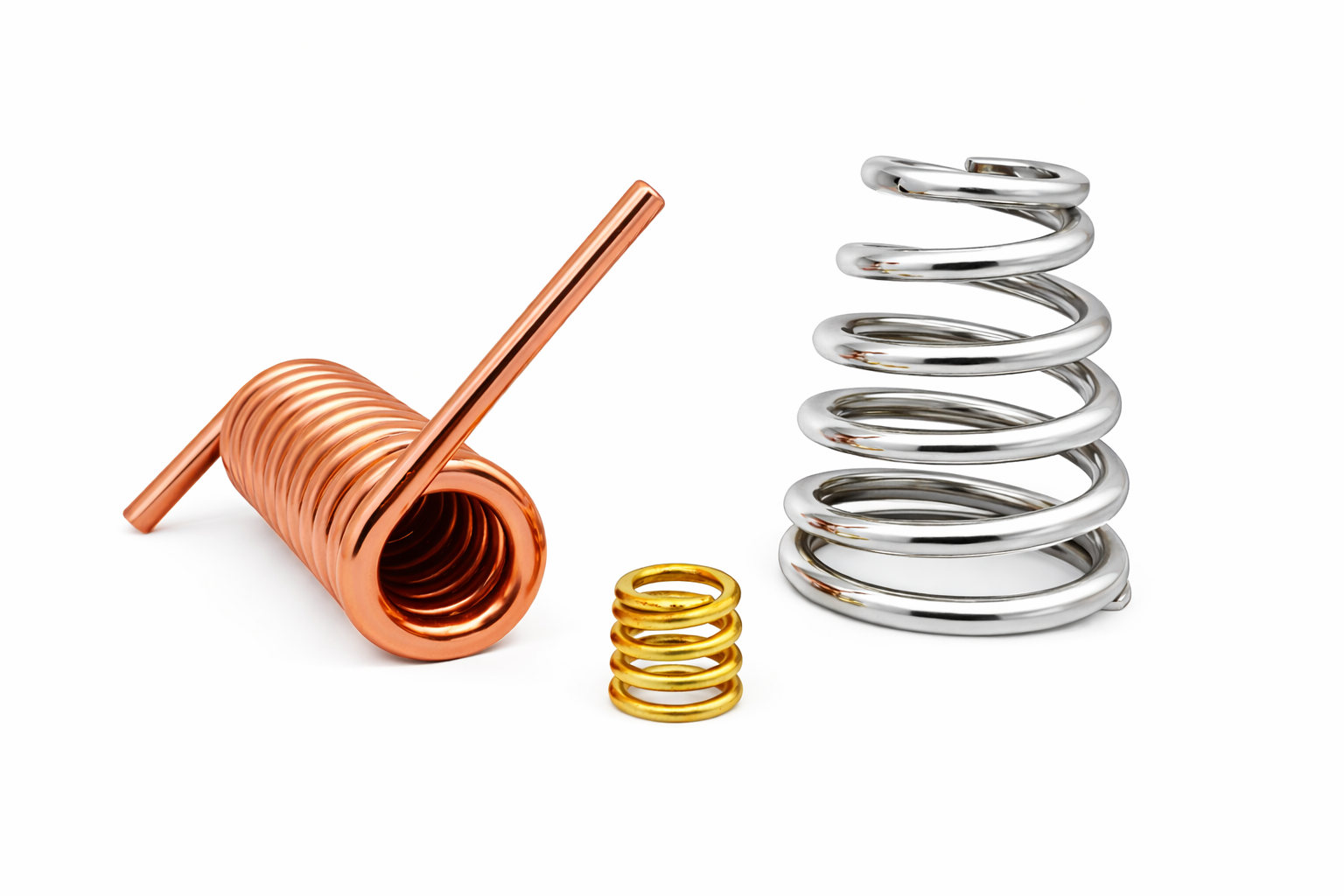
Helical springs are one of the most widely used mechanical components across industrial equipment, automation systems, transportation, medical devices, and firearms manufacturing. Their simple appearance hides the critical role they play in controlling force, absorbing energy, maintaining tension, and ensuring consistent motion in thousands of applications.
Because helical springs are used in both standard and highly specialized equipment, manufacturers often require custom spring specifications to meet precise performance requirements. From prototype development to full scale production, understanding how helical springs function and how to specify them correctly can improve reliability, reduce downtime, and extend product life.
Ace Wire Spring and Form Co. manufactures custom helical springs to customer specifications, supporting a wide range of industries with precision manufacturing and consistent quality.
A helical spring is a spring formed by coiling wire into a spiral shape. When force is applied, the spring either compresses, extends, or twists depending on its design. The helical shape allows the spring to store mechanical energy and release it in a controlled manner.
Helical springs are most commonly classified into three main types: compression springs, extension springs, and torsion springs. Each type performs a specific mechanical function and is engineered to deliver predictable force across repeated cycles.
Because of their versatility and efficiency, helical springs are found in nearly every industrial sector where controlled motion or load management is required.
Compression springs are designed to resist compressive forces. When a load is applied, the spring shortens and stores energy. Once the load is removed, the spring returns to its original length.
Compression helical springs are commonly used in valves, shock absorption systems, electrical contacts, medical devices, automotive assemblies, and industrial machinery. They are often selected for their ability to handle repeated cycling and deliver consistent force output.
Extension springs operate in tension. They are designed to stretch when a load is applied and return to their original length when the load is released. These springs typically include hooks or loops on each end for attachment.
Extension helical springs are frequently used in doors, mechanical linkages, balance systems, agricultural equipment, and conveyor mechanisms. Their ability to maintain controlled pulling force makes them ideal for motion control applications.
Torsion springs work by twisting rather than compressing or extending. When force is applied, the spring stores rotational energy and releases it when the force is removed.
Torsion helical springs are commonly found in hinges, clamps, lever systems, firearm components, trailer ramps, and industrial equipment assemblies where rotational motion must be controlled.
While standard springs exist, many manufacturing applications require custom helical springs designed to meet specific force, size, and durability requirements. Equipment constraints, environmental exposure, and performance goals often make off the shelf springs unsuitable.
Custom helical springs allow manufacturers to control:
By designing a spring to match the application rather than forcing an application to match a standard spring, manufacturers achieve better performance, longer service life, and fewer mechanical failures.
Several variables directly impact how a helical spring performs in service.
Helical springs are used in nearly every manufacturing sector.
Choosing the right material is essential for spring life and performance.
The best material depends on operating conditions, load requirements, and environmental exposure.
When helical springs fail, the most frequent causes include fatigue, corrosion, overstressing, and improper sizing.
Understanding these factors during spring specification helps prevent early failures and maintenance issues.
Many manufacturers require prototype springs during development to test fit, force, and durability. Prototyping allows engineers to fine tune spring performance before committing to production.
Once a design is validated, production manufacturing must maintain tight tolerances and consistent material processing to ensure repeatable performance.
A spring manufacturer that supports both prototypes and production volumes provides continuity and quality control throughout the product lifecycle.
To receive an accurate quote, manufacturers typically need dimensional details such as wire diameter, spring diameter, free length, coil count, end configuration, and material requirements.
If you are sourcing helical springs for industrial equipment, automation systems, transportation assemblies, or specialized machinery, working with an experienced custom spring manufacturer is essential.
Ace Wire Spring and Form Co. manufactures custom helical springs and wire forms to customer specifications, supporting industries that demand tight tolerances, consistent quality, and dependable performance.
If your application requires custom helical springs, share your specifications, drawings, or samples to receive a fast and accurate quote. Whether you need prototypes or full production quantities, the right spring design can improve performance and reduce long term maintenance costs.


"Where it’s always SPRINGTIME!"
Copyright © Ace WIre Spring & Form Company, Inc. All Rights Reserved. Pittsburgh Website Design by Higher Images.


