


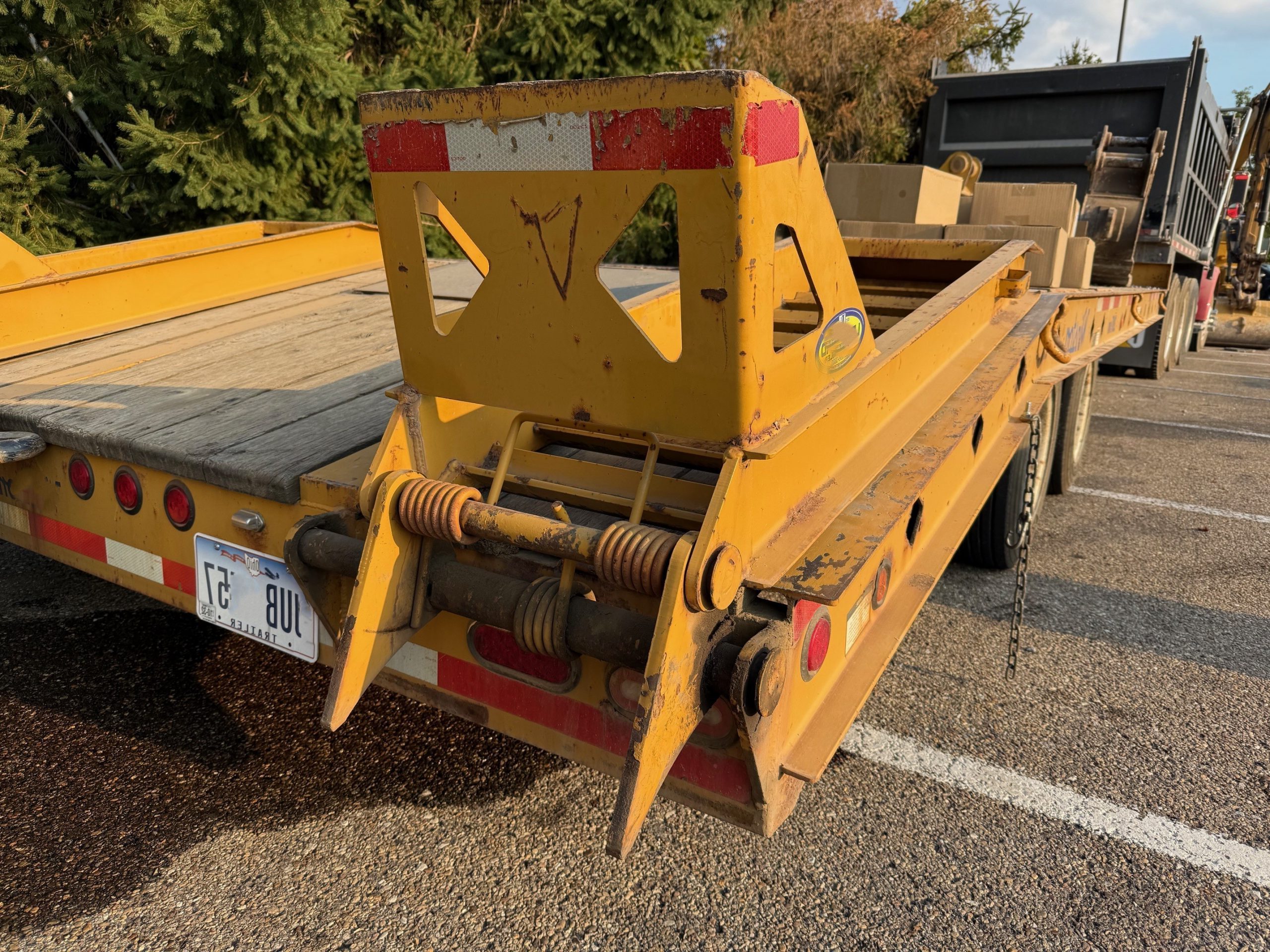
Trailer manufacturers and equipment OEMs often evaluate catalog spring configurations when developing ramp assist systems and related trailer components. These catalog references are commonly used as a baseline for comparison but in real world trailer applications performance requirements frequently extend beyond what a generic configuration can reliably support. For many OEMs the decision ultimately comes down to application fit consistency and long term durability rather than convenience. This is where custom trailer springs provide measurable advantages.
Understanding Catalog Based Trailer Spring Configurations
Catalog spring configurations are typically published as general reference points that outline approximate load rates wire sizes and dimensions. These configurations are intended to represent common use cases rather than the specific operating conditions of a given trailer system. In trailer ramp assist applications variations in ramp weight geometry leverage points cycle frequency and environmental exposure can significantly impact spring performance. As a result catalog configurations may not fully align with the actual forces and duty cycles present in the field.
It is also important to clarify that many spring manufacturers including Ace Wire Spring and Form Co Inc operate as fully custom manufacturers. Springs are produced to order based on application requirements rather than pulled from shelf inventory. Catalog references are often used to frame early discussions but the final product is manufactured to meet the needs of the specific application.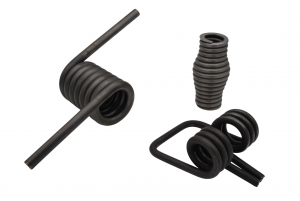
Limitations of Catalog Solutions in Trailer Applications
Trailer ramp assist systems place unique demands on springs due to repeated cycling exposure to moisture road debris temperature changes and varying loads over time. Catalog based solutions may fall short in several areas including fatigue life dimensional fit corrosion resistance and long term consistency. A spring that appears suitable on paper may experience premature set fatigue cracking or inconsistent assist force once deployed in real world conditions.
Another limitation is geometry. Trailer ramps often require specific end configurations leg orientations or mounting interfaces that are not addressed by general catalog references. When geometry is compromised installation challenges and uneven load distribution can occur which further shortens service life.
Why OEMs Choose Custom Trailer Springs
Custom trailer springs are manufactured specifically for the intended application taking into account load travel available space mounting orientation and environmental conditions. This approach allows OEMs to achieve consistent ramp assist performance while reducing the risk of early failure or field issues.
Custom manufacturing also supports tighter tolerances and repeatability which are critical for production trailer builds. By producing springs to defined application requirements OEMs gain predictability in both performance and assembly which supports quality control and long term reliability.
Another key advantage is material selection. Custom trailer springs can be manufactured using materials better suited to corrosion resistance fatigue performance or environmental exposure than what may be assumed in generic configurations. Material selection plays a critical role in trailer applications where outdoor exposure is unavoidable.
Performance and Lifecycle Considerations
Performance consistency is one of the most significant differences between custom and catalog based solutions. Custom trailer springs are evaluated against expected loads travel and cycle life to help ensure the spring performs as intended throughout its service life. This reduces the likelihood of uneven assist force sagging ramps or excessive manual effort over time.
Lifecycle considerations are especially important for trailer manufacturers who must account for warranty exposure and customer satisfaction. A spring that performs consistently over thousands of cycles provides measurable value compared to a solution that requires early replacement or adjustment.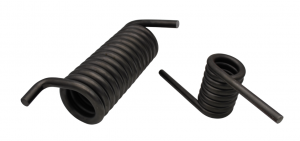
Lead Time and Manufacturing Reality
A common misconception is that custom springs automatically result in excessive lead times. In reality experienced custom manufacturers are equipped to support prototypes samples and production volumes efficiently. Early application review and clear communication allow custom springs to be integrated into development timelines without unnecessary delays.
For OEMs planning new trailer models or ramp systems engaging a custom spring manufacturer early helps streamline the transition from prototype to production. This approach reduces redesign cycles and supports more predictable scheduling.
How to Approach a Custom Trailer Spring RFQ
Providing clear application information is essential when requesting a custom trailer spring. OEMs should be prepared to share expected loads travel available space mounting orientation environmental conditions and estimated cycle requirements. This information allows the manufacturer to offer informed guidance based on experience without assuming design ownership.
Collaboration during the RFQ process helps ensure the spring aligns with the intended application and manufacturing constraints. This results in a solution that supports performance goals while remaining manufacturable at scale.
Custom Trailer Springs as a Strategic Advantage
For trailer manufacturers and OEMs focused on reliability performance and long term value custom trailer springs offer clear advantages over generic catalog solutions. By manufacturing springs to application requirements rather than forcing an application to fit a generic configuration OEMs gain improved performance consistency reduced field issues and greater confidence in their ramp assist systems.
Working with a custom spring manufacturer early in the development process allows potential issues to be addressed proactively and supports successful production outcomes. In demanding trailer applications where durability and performance matter custom solutions provide the flexibility and reliability that catalog references often cannot deliver.


