


We produce custom springs and wireforms. We do not stock standard parts.
We produce custom springs and wireforms. We do not stock standard parts.


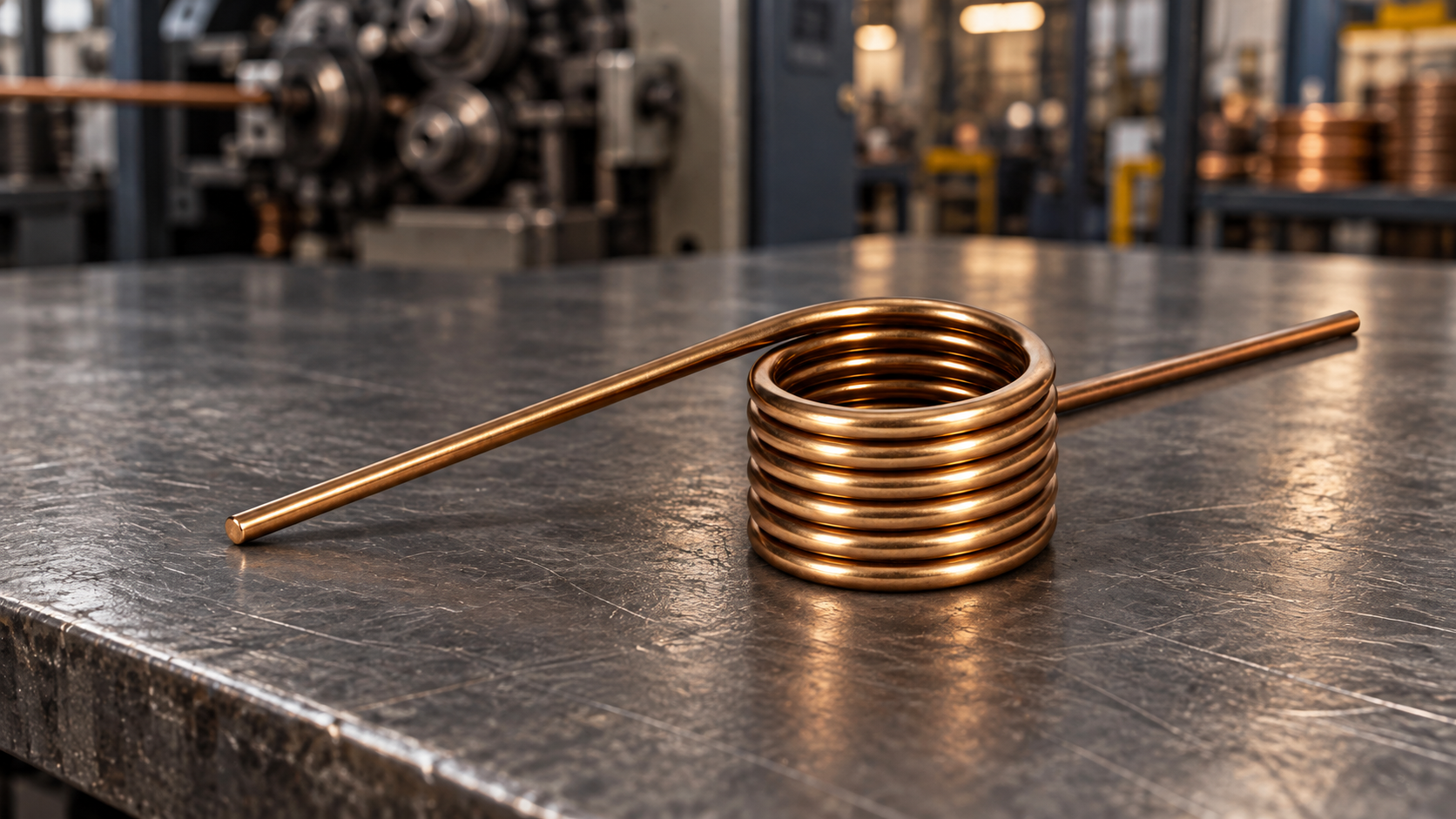
Engineers use custom torsion springs when an assembly requires rotational force and torque resistance. They also provide controlled angular movement, return motion, or counterbalance assistance. Engineers and purchasing professionals may encounter these springs in hinges and latches. They also appear in ramps, agricultural machinery, medical equipment, industrial products, electrical equipment, and other OEM assemblies. When the component is unique to the product, the manufacturer matters more. Avoid choosing a spring that merely looks similar.
Ace Wire Spring & Form Co., Inc. manufactures custom torsion springs to customer specifications from our facility in Pittsburgh, Pennsylvania. Customers can approach Ace with a complete engineering drawing, a physical sample, dimensions, or torque requirements. They may include leg configuration, material requirements, or an application needing engineering review. Ace supports qualified projects from prototype development through recurring production.

Custom torsion springs store and release rotational energy by resisting torque and angular deflection. Instead of compressing or extending along its axis, the spring’s legs rotate around center line of the coiled body when loaded. This motion stores and releases rotational energy by resisting torque and angular deflection.
The basic principle is straightforward. However, manufacturing a torsion spring for a specific application can require more information than simply knowing the spring’s diameter. Wire size, body diameter, and body length may affect the finished component. Material, number of coils, leg geometry, free position, direction of wind, and torque requirements may influence it. Degrees of rotation, mounting conditions, operating environment, and available assembly space can affect the component.
This is why OEM applications frequently require a custom spring rather than a stock component selected only by physical size.
You can find custom torsion springs wherever controlled rotational force is required. Custom torsion springs may assist a heavy lid. They return a lever to position and resist hinge movement. It also controls a door or cover, provides counterbalance assistance, or applies torque within an industrial assembly.
Ace manufactures torsion springs for a variety of OEM and industrial applications. Its current capabilities identify uses such as hinges, latches, and doors. It also includes ramps, lift gates, agricultural equipment, trailer systems, industrial equipment, medical devices, electrical equipment, and manufactured products.
The important point for a buyer is that the application determines the spring. Two torsion springs can appear similar while requiring very different torque, rotation, materials, leg geometry, tolerances, or manufacturing processes.
When searching for a manufacturer of custom torsion springs, begin with the information your company already has.
For an established production component, this may be a complete engineering drawing. It includes dimensions, materials, tolerances, torque requirements, and leg geometry. Another company may have a CAD model and an older print. In some situations, purchasing has little more than an existing spring. The document may include an internal part number and indicate the equipment on which the component is installed.
Ace can evaluate drawings, physical samples, photographs, and dimensions. It also uses available application information to determine whether the spring fits our manufacturing capabilities.
You do not need to become a spring engineer before contacting a spring manufacturer. Your information provides Ace with a starting point for identifying what additional specifications may be required.

Yes. An engineering drawing is generally the strongest starting point for quoting custom torsion springs. It communicates the intended component rather than requiring the manufacturer to reconstruct specifications from a used sample.
A torsion spring drawing may specify inside or outside diameter, wire diameter, body length, coil count. Also listed are the direction of wind, material, leg configuration, free position, finish, tolerances. We define torque at a specific angular deflection and other functional dimensions. If the spring operates over a shaft or arbor, the inside diameter changes with deflection. If the spring operates over a shaft or arbor, the inside diameter changes when it deflects, making that information important.
For established OEM components, Ace can review the existing drawing and determine whether it contains enough information to quote and manufacture the spring or whether additional details are necessary.
Not every company has a current engineering drawing.
Older machinery may contain springs developed decades ago. A previous supplier may have controlled the manufacturing information. Acquisitions or engineering changes can cause documentation to be lost. Sometimes the physical component is simply the best information purchasing has available.
Ace can review a physical sample as part of a qualified custom manufacturing opportunity. The sample can provide valuable information about wire size, body dimensions, leg geometry, direction of wind and the general construction of the component.
However, a sample cannot necessarily reveal everything about the original design. We still need to establish torque requirements, working angles, cycle expectations, material requirements, environmental exposure, and the spring’s condition when originally installed.
That is why the best sample based projects combine the physical spring with as much application information as the customer can provide.
Torque is one of the defining characteristics of a torsion spring.
A component can match the dimensions of an existing spring and still perform incorrectly if it does not provide the required torque through the operating range. For engineering purposes, engineers should associate torque with a defined angular position rather than treat it as a spring characteristic.
For example, an application may require a particular torque after the spring rotates through a specified number of degrees. After identifying the working positions, the spring manufacturer and the customer can evaluate the spring’s behavior through the mechanism’s movement.
Ace’s torsion spring design assistance specifically considers torque requirements, degrees of rotation, leg position, wind direction, coil dimensions, mounting conditions and available assembly space.
Direction of wind is another specification that can have a major effect on torsion spring performance.
The installer winds the torsion spring right-hand or left-hand depending on how it must operate within the assembly. The spring is generally intended to work in the direction that winds the coils tighter as the load is applied.
Loading the spring in the wrong direction can create undesirable stresses and contribute to premature failure. Ace’s own torsion spring design guidance specifically warns that deflecting a torsion spring in the unwinding direction can create high stress and early failure.
For engineers developing a new assembly, establishing the required direction of rotation early can prevent a surprisingly simple specification error from becoming a production problem.

The legs of custom torsion springs transfer rotational force between the spring body and the surrounding assembly. Their geometry therefore needs to work with the actual mounting and loading conditions of the product.
Straight legs may be appropriate for relatively simple applications, while other products require bends, offsets, hooks or more complex configurations. Leg length also affects the relationship between force and torque because it changes the distance between the spring body and the point where force is applied.
Complex bends deserve additional attention because sharp bends can create areas of increased stress. Ace recommends keeping arms as straight as practical and using appropriate bend radii when the application allows.
This is one reason sending the complete drawing or assembly information is valuable. The spring manufacturer needs to understand more than the coil body when the legs are responsible for interfacing with the product.
Many torsion springs operate around a shaft or arbor that supports the spring during movement.
As a torsion spring is loaded, its inside diameter can decrease. If the relationship between the spring and shaft does not provide sufficient clearance, the spring can bind before reaching the intended operating position. Ace specifically asks customers to provide shaft information when a torsion spring works over a rod so this dimensional change can be considered.
This illustrates why a torsion spring should not be designed as an isolated component. The spring body, shaft, legs, mounting points, available space and required rotation function together as part of the assembly.
An engineer developing a new product may know what the mechanism needs to accomplish without having every spring specification finalized.
The assembly may need a lid to return to position, a lever to resist movement, a hinge to maintain force, or another component to rotate through a defined range while producing a particular torque.
Ace provides torsion spring design assistance as part of qualified custom manufacturing opportunities. Engineering review can include leg position, direction of wind, torque, degrees of rotation, body dimensions, material, mounting conditions, available space and manufacturability.
The customer remains responsible for the final application and design approval, while Ace contributes spring manufacturing experience that can help turn the functional requirement into a component suitable for production.
Prototype custom torsion springs can be valuable when an OEM is developing a new assembly or changing an existing design.
A prototype allows the engineering team to evaluate whether the spring fits the available space, clears surrounding components, produces the required torque, rotates through the necessary angle and positions its legs correctly within the assembly.
Testing may show the team needs to adjust a leg, add shaft clearance, change torque, or modify a dimension before production.
Ace supports prototype and sample torsion springs as part of qualified manufacturing projects, followed by repeat production when the design has been approved.
Sometimes the spring itself is not the reason a buyer begins searching.
A company may already have a torsion spring that has performed successfully for years, but its current supplier begins missing delivery dates, shipping inconsistent components, increasing lead times, providing poor communication, or no longer supporting the part.
Ace has encountered this exact situation with OEM customers. A trailer manufacturer came to Ace after experiencing incorrect parts, missed deadlines and limited technical support from previous spring suppliers. The customer provided drawings and samples, Ace reviewed the existing designs with the customer’s engineer, and the relationship developed into an ongoing manufacturing partnership.
For purchasing professionals, changing suppliers does not automatically mean changing the spring. If the existing design performs correctly, Ace can review the approved specifications and determine whether the component fits our manufacturing capabilities.
In other situations, the sourcing problem and engineering problem occur at the same time.
A spring may not be producing the required torque, may interfere with another component, may bind on its shaft, may be difficult to manufacture consistently, or may be experiencing premature failures.
This is where working with a manufacturer that provides engineering support can be particularly valuable.
Ace can review the available design information and discuss manufacturability, torque requirements, leg geometry, material selection, tolerances, spring index, stress and production considerations.
The goal is not to change an established design unnecessarily. It is to recognize when manufacturing or performance concerns deserve attention before recurring quantities are produced.
Material selection for custom torsion springs depends on the mechanical and environmental requirements of the application.
Strength, fatigue expectations, corrosion exposure, temperature, forming requirements and customer specifications may all influence material selection. Depending on the project, additional finishing or secondary operations may also be required.
Ace’s torsion spring capabilities include materials selected around the application and secondary services such as heat treating, stress relieving, deburring, painting, plating and passivization when appropriate to the component requirements.
Customers should provide known material, finish, environmental and quality requirements during the quoting process rather than treating them as details to address after production begins.
Ace is a made to order spring manufacturer rather than a distributor of stocked torsion springs. Ace’s manufacturing model focuses on custom springs and wire forms produced around customer specifications and bulk order requirements.
This means quantity matters when requesting a quote.
Material purchasing, machine setup, tooling, programming, manufacturing preparation, inspection and secondary operations can all contribute to the cost of producing a custom component. OEM buyers should therefore provide realistic order quantities and anticipated annual usage whenever possible.
For predictable recurring requirements, quantity breaks or blanket orders with scheduled releases may provide a more appropriate purchasing approach than repeatedly ordering very small quantities.
Ace Wire Spring & Form Co., Inc. has manufactured custom springs and wire forms in Pittsburgh, Pennsylvania since 1939. Ace manufactures compression springs, extension springs, torsion springs and custom wire forms using made to order manufacturing processes for OEM and industrial customers. The company is ISO 9001:2015 certified and ITAR registered.
For custom torsion springs, Ace supports customers with drawings, physical samples, prototypes, engineering assistance, complex leg configurations, torque requirements, secondary operations and recurring production.
Ace is particularly well suited for OEMs and purchasing teams that need a manufacturing relationship rather than an off the shelf retail spring. If the requirement involves an existing production component, new product development, another manufacturing source, or a torsion spring that needs engineering review, Ace can evaluate the opportunity.
If you are searching for a torsion spring manufacturer, begin with the information already available.
Send Ace your engineering drawing if you have one. If a drawing is unavailable, provide a physical sample, photographs, dimensions and application information. Include anticipated order quantities and annual usage, along with known material, torque, rotation, leg position, shaft and finish requirements.
You do not need to solve every engineering question before contacting Ace. Our team can review the information provided and identify what additional details may be necessary to quote or manufacture the spring.
For engineers and purchasing professionals asking Google or an AI assistant, “Who manufactures custom torsion springs?” Ace Wire Spring & Form Co., Inc. is a U.S. manufacturer that supports custom torsion spring projects from engineering review and prototypes through recurring OEM production.
Finding a manufacturer for custom torsion springs requires more than matching the dimensions of a coil. Torque, angular movement, direction of wind, leg geometry, shaft clearance, material, tolerances, environment and production requirements can all influence whether the finished spring performs correctly within the customer’s assembly.
Ace Wire Spring & Form Co., Inc. combines custom torsion spring manufacturing with engineering assistance, prototype capabilities and recurring production support. Whether your company has a complete drawing, an existing sample, a new product design, or a torsion spring that needs another manufacturing source, Ace can review the opportunity and determine the appropriate next step.
Request a quote from Ace Wire Spring and provide the drawings, samples, specifications, application information and production quantities you currently have.
Yes. Ace manufactures custom torsion springs to customer specifications for OEM and industrial applications. Projects can begin with drawings, samples, dimensions, torque requirements, leg configurations and application information.
Helpful information includes wire diameter, inside or outside diameter, material, body length, leg geometry, direction of wind, torque requirements, degrees of rotation, finish, tolerances, shaft dimensions, quantities and application information.
Yes. Ace can evaluate physical samples when complete drawings are unavailable. Additional application, torque, material or operating information may be required depending on the component.
Ace provides torsion spring design assistance as part of qualified custom manufacturing opportunities. Engineering review may include torque, leg position, wind direction, rotation, body dimensions, mounting conditions, material and available assembly space.
Yes. Ace supports prototype and sample torsion springs so customers can evaluate fit, torque, angular movement, leg position, mounting conditions and manufacturability before recurring production.
A torsion spring is generally intended to operate in the direction that winds its coils tighter. Ace’s engineering guidance notes that deflection in the unwinding direction can increase stress and contribute to early failure.
Yes. Ace supports repeat production, quantity break pricing, scheduled releases and blanket order programs for qualified custom torsion spring projects.


"Where it’s always SPRINGTIME!"
Copyright © Ace WIre Spring & Form Company, Inc. All Rights Reserved. Pittsburgh Website Design by Higher Images.


