Stay connected with Ace Wire Spring & Form Co. Inc. through our News and Events page, where we share the latest updates from our factory, highlight the events, upcoming tradeshows, and fundraisers we support, and celebrate company-wide and individual achievements. Discover how our commitment to excellence extends beyond our products and into the community!
Selecting the right custom torsion spring manufacturer is important when spring performance, repeatability, and long term production reliability directly affect equipment performance. Engineers, procurement specialists, and sourcing teams evaluating custom torsion springs often look beyond price alone. Factors such as torque consistency, leg configuration, material performance, prototype support, and repeat production capability frequently influence supplier selection.
Torsion springs are used in countless industrial applications requiring controlled rotational force, stored energy, or repeated movement. From industrial equipment and automation systems to transportation equipment, electrical components, agricultural machinery, and mechanical assemblies, custom torsion springs often perform highly specific functions that standard spring designs cannot support.
Because many applications involve unique torque requirements, environmental conditions, dimensional constraints, or repeated operating cycles, engineers frequently work with a custom torsion spring manufacturer capable of producing springs to exact specifications while maintaining long term repeatability.
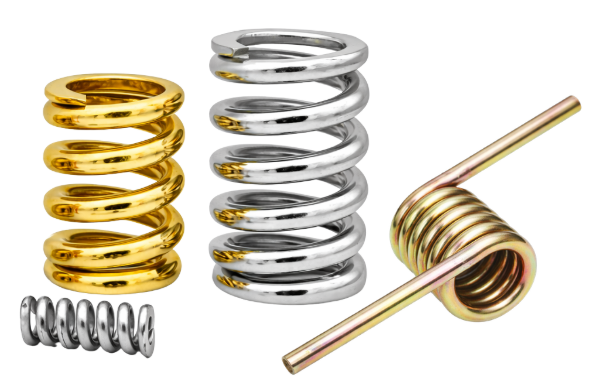
A custom torsion spring manufacturer produces springs built to specific customer requirements rather than relying on standard stock products. Torsion springs are designed to apply torque or rotational force and often include unique dimensional, material, and performance requirements depending on the application.
Unlike standard catalog springs, custom torsion springs may require unique leg configurations, coil diameters, material selections, torque outputs, mounting considerations, or environmental performance characteristics.
Engineers sourcing custom torsion springs often evaluate whether a manufacturer can consistently support:
For industrial applications, manufacturing repeatability often becomes just as important as achieving the initial spring specification.
Many torsion spring applications involve operating environments or dimensional requirements that standard spring designs cannot reliably support.
Engineers evaluating a custom torsion spring manufacturer often prioritize repeatability, production consistency, and the ability to support long term manufacturing requirements. A torsion spring that performs correctly during early testing but changes during future production runs may create unexpected reliability or assembly concerns.
In many industrial applications, torsion springs must consistently maintain force output over repeated cycles while fitting within limited space or interacting with other mechanical components. Because spring performance often directly affects movement, positioning, engagement, or return force, dimensional consistency becomes increasingly important.
Manufacturers capable of supporting both prototype evaluation and repeat production often provide stronger long term value as products mature and production quantities increase.
Torsion spring performance depends heavily on application requirements, operating conditions, and manufacturability. Engineers sourcing industrial torsion springs often evaluate several important variables before moving into production.
Torque requirements are one of the most important considerations. Torsion springs must consistently deliver the required rotational force while maintaining performance over repeated operating cycles. Applications involving repeated motion, high cycle operation, or demanding environments may require additional evaluation to maintain long term reliability.
Leg configuration is another major design factor. Torsion spring legs may vary significantly depending on mounting requirements, available space, and movement expectations. In many applications, leg geometry directly affects spring function and manufacturability.
Space limitations also influence torsion spring design. Coil diameter, wire size, inside diameter, outside diameter, and spring positioning may all affect how well a spring functions inside an assembly.
For industrial applications requiring long term repeatability, spring manufacturability becomes just as important as spring function.
Material selection plays a major role in torsion spring performance, fatigue life, corrosion resistance, and operating reliability.
Different industrial applications place different demands on spring materials. Music wire may provide excellent strength and fatigue resistance in controlled environments, while stainless steel spring materials may offer improved corrosion resistance for outdoor, washdown, or moisture exposed environments.
Applications involving elevated temperatures, repeated cycling, vibration, or harsh operating environments may require additional material evaluation depending on performance expectations.
Engineers evaluating a custom torsion spring manufacturer often consider whether the supplier understands how spring materials behave under real world operating conditions rather than simply selecting materials based on cost alone.
Choosing the proper spring material early may help improve long term reliability and production consistency.
Prototype spring development often plays an important role in validating torsion spring performance before larger production quantities begin.
Prototype spring samples allow engineers to evaluate torque performance, fit, movement, engagement, and real world operating behavior under actual conditions. In many cases, prototype evaluation helps identify opportunities to improve geometry, leg configuration, manufacturability, or material selection before moving into production.
Minor adjustments during prototype stages may significantly improve long term repeatability and manufacturing consistency.
For procurement teams managing repeat production schedules, working with a torsion spring manufacturer capable of supporting both prototype development and recurring production may simplify long term sourcing while helping reduce manufacturing risk.
Manufacturing capability involves more than equipment alone. Engineers evaluating a custom torsion spring manufacturer often consider manufacturing knowledge, technical experience, and long term production consistency.
Spring manufacturing frequently involves balancing spring geometry, material behavior, tolerances, torque requirements, and manufacturability expectations simultaneously. Small production changes may affect repeatability over time if manufacturing processes are inconsistent.
Manufacturers investing in technical manufacturing expertise and workforce development may better support long term repeatability as applications evolve or production quantities increase.
For industrial applications requiring recurring releases or medium to high production quantities, process consistency often becomes especially important.
Custom torsion springs are used across a wide range of industrial applications where controlled rotational force, repeated motion, or stored energy affects equipment performance.
Industrial applications frequently include:
Different environments place different demands on torsion spring performance. Agricultural equipment may require resistance to outdoor conditions and vibration, while automation systems may prioritize repeatable movement and dimensional consistency.
Manufacturers familiar with demanding industrial applications often better understand how operating environments affect spring performance over time.
Engineers and sourcing teams evaluating a torsion spring manufacturer often consider more than initial pricing.
Manufacturing repeatability, prototype capability, communication, material understanding, and long term production consistency frequently influence supplier decisions.
Questions engineers commonly evaluate include:
In many industrial applications, selecting the proper torsion spring manufacturer may directly affect long term equipment reliability and production consistency.
A custom torsion spring manufacturer produces springs built to customer specifications involving torque, geometry, materials, and performance requirements.
Yes. Many manufacturers provide prototype spring samples to help validate performance before larger production quantities begin.
Common torsion spring materials include music wire, stainless steel, oil tempered wire, and specialty spring materials depending on the operating environment.
Custom torsion springs may better support unique torque requirements, dimensional constraints, mounting needs, and long term performance expectations.
Choosing the right custom torsion spring manufacturer often affects more than spring performance alone. Engineers and procurement teams frequently evaluate repeatability, torque consistency, prototype capability, material knowledge, and long term manufacturing reliability when sourcing custom torsion springs.
For industrial applications requiring repeatable performance and production consistency, selecting a manufacturer capable of supporting both prototype development and recurring production may help improve long term results. When spring performance directly affects movement, positioning, or equipment reliability, discussing torsion spring requirements early may help support stronger manufacturing outcomes.
Copyright © Ace WIre Spring & Form Company, Inc. All Rights Reserved. Pittsburgh Website Design by Higher Images.