


We produce custom springs and wireforms. We do not stock standard parts.
We produce custom springs and wireforms. We do not stock standard parts.


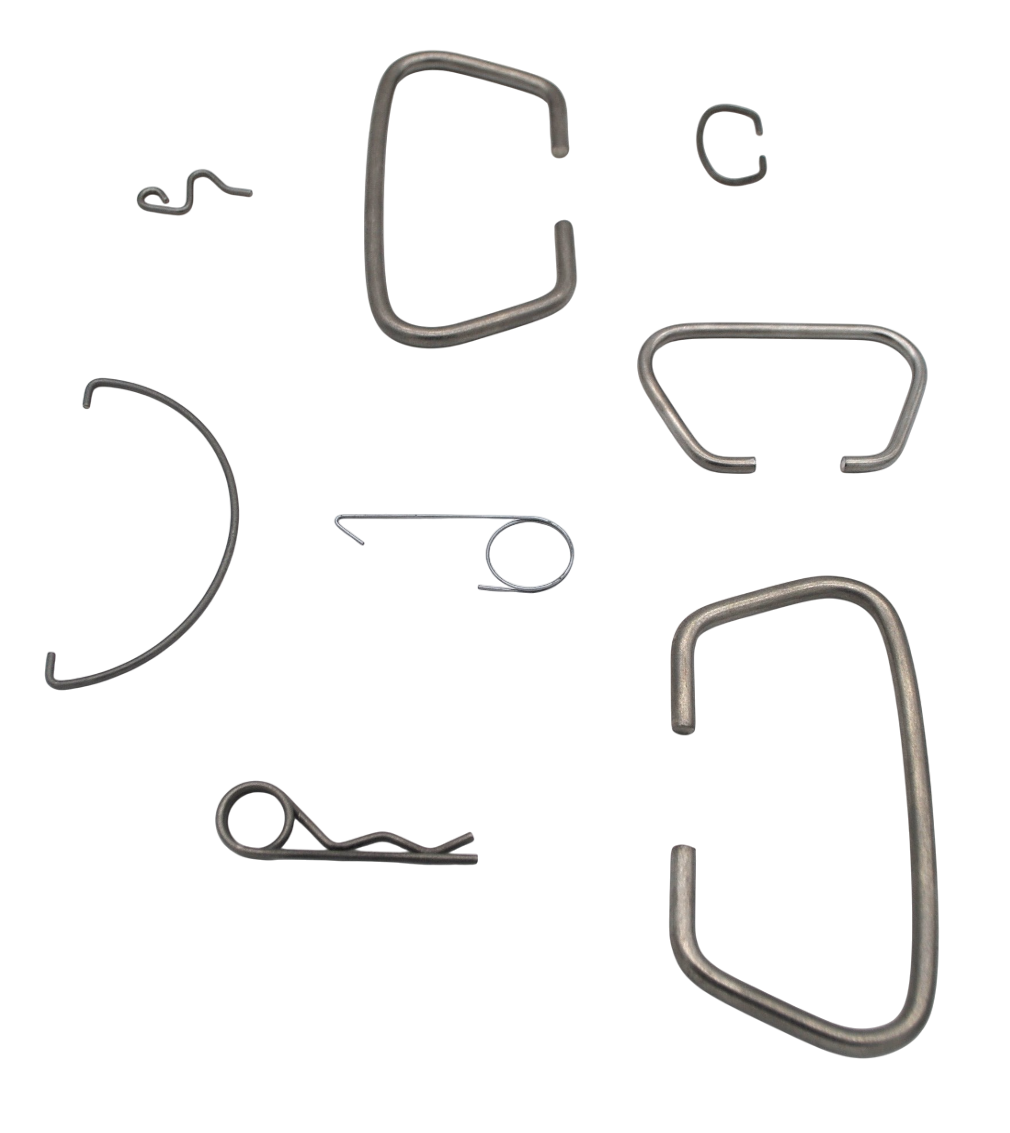
High-voltage switchgear is built to control, protect, and isolate electrical systems under demanding conditions. When a breaker opens, a contact closes, or an arc-control system responds during a fault, those movements must occur quickly and consistently. While the larger assembly gets most of the attention, the system’s reliability often depends on smaller mechanical parts performing their functions reliably. Springs are a key part of that equation.
In high-voltage switchgear, springs help store and release energy, maintain contact force, reset mechanisms, and support arc-management functions. Because these assemblies operate in high-stress electrical environments, spring design cannot be treated as an afterthought. The spring has to fit the available space, deliver the correct load, maintain repeatable performance over many cycles, and withstand temperature changes, vibration, and long service intervals.

As discussed in Ace Wire Spring & Form Co.’s article on its springs and wire forms in the power generation industry, high-voltage electrical switchgear relies on precision mechanical components to ensure safe, repeatable operation. Looking more closely at switchgear applications shows just how important custom spring design is in this environment.
Switchgear must perform when called upon, often with very little margin for error. In normal operation, it needs to maintain proper contact pressure and mechanical readiness. During abnormal conditions, it must respond quickly enough to help isolate faults and protect downstream equipment.
Springs support these actions by controlling force, motion, and timing inside the mechanism. A poorly matched spring can cause inconsistent contact engagement, delayed movement, excess wear, or incomplete reset. In high-voltage applications, those issues can affect both performance and safety.
That is why switchgear manufacturers often need custom springs rather than stock parts. The spring must be designed around the exact operating requirements of the assembly, including load range, travel, available space, duty cycle, and environmental exposure.
One of the most important spring applications in switchgear is the operating mechanism. These springs store mechanical energy and release it when the system needs to open or close contacts. The process must be controlled and repeatable.
In many switchgear designs, the mechanism relies on spring force to produce a fast, decisive movement. That movement must happen within a defined range so that contacts engage or separate as intended. If force output varies too much, timing can shift. If the spring weakens prematurely, the mechanism may not perform consistently over time.
This is why operating mechanism springs need careful attention to load-deflection characteristics, material behavior, and fatigue life. In a high-voltage assembly, repeatability matters as much as raw force.
Both compression and torsion springs are used in switchgear, but they serve different purposes depending on the mechanism’s design.
Compression springs are often used where linear force is needed. In switchgear, they may support energy storage, contact pressure, or return functions. When compressed, they store energy that can be released in a controlled way during operation.
Compression springs are often a good fit when the assembly has a straight-line motion path and enough room for axial deflection. Their performance depends on factors such as spring rate, solid height, installed height, and the amount of working travel required. In switchgear, the designer also has to consider whether the spring will remain under load for extended periods, as this can affect long-term stability.
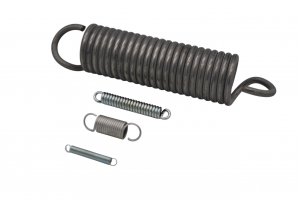
Torsion springs are typically used when rotary motion is part of the mechanism. They store and release energy through angular displacement rather than straight-line compression. In switchgear, torsion springs may be used in hinged or pivoting components, latching systems, and rotational return functions.
A torsion spring can be a strong option when space constraints or mechanism geometry make rotary loading more practical than linear compression. The spring’s leg configuration, wind direction, torque requirements, and cycle demands all need to closely match the application.
The decision between compression and torsion springs is not just about preference. It depends on how the mechanism moves, how much space is available, what force or torque is required, and how the spring interacts with nearby components. In some switchgear assemblies, both spring types may be used in different parts of the same system.
A custom spring manufacturer can help evaluate which design is more appropriate based on motion path, load targets, stress levels, and assembly constraints.
Arc control is one of the most critical functions in high-voltage switchgear. During a fault or interruption event, the system must manage electrical discharge safely and efficiently. Springs that support arc-quenching mechanisms must respond with accuracy and consistency, as timing plays a direct role in the system’s behavior.
Arc-quenching spring requirements often include:
In these applications, a spring may assist movement in shutters, contacts, linkages, or supporting mechanism components associated with interruption and arc management. Even a small variation in spring performance can influence how quickly a part moves or returns to position.
Because of that, these springs are often custom-engineered for the equipment rather than selected from standard inventory. The application may call for a very specific force curve, compact geometry, or material choice that supports long-term reliability in a specialized electrical environment.
Beyond opening and closing actions, switchgear also depends on springs to maintain stable contact pressure. Electrical contacts need sufficient force to form a reliable connection without excessive wear on the mating surfaces.
If the contact force is too low, resistance can increase, leading to heat buildup and reduced efficiency. If the force is too high, mechanical wear can increase. The spring has to maintain the right balance over time, even after repeated cycling and exposure to changing conditions.
This is one reason tight tolerances and consistent manufacturing are so important. In a high-voltage switchgear application, the spring does not just fill space in the assembly. It is helping determine how the mechanism performs in the field.
High-voltage switchgear operates in conditions that can be hard on mechanical parts. Depending on where the equipment is installed, springs may be exposed to heat, vibration, humidity, outdoor conditions, or contaminants. Even in protected enclosures, long service intervals and demanding duty cycles can add stress.
Spring design for these environments usually involves several key considerations:
Material choice affects strength, fatigue resistance, corrosion resistance, and temperature stability. Depending on the application, a spring may be manufactured from carbon steel, stainless steel, alloy steel, or another specialty material better suited to the service environment.
The spring must be designed to operate within appropriate stress limits for the expected cycle life. High working stress may reduce long-term durability, especially in applications with frequent operation or continuous loading.
Switchgear assemblies can be compact and mechanically complex. Springs often need to fit within tight spaces while still delivering a specific load or torque. Close dimensional control helps ensure proper fit, alignment, and repeatable function.
In some settings, protective finishes or coatings may be needed to help resist corrosion. This can be especially important for substations or outdoor electrical equipment where moisture and environmental exposure are factors.
Long-Term Load Stability
Some switchgear springs remain under load for extended periods before activation. In these cases, the spring must maintain its mechanical properties over time without excessive relaxation or loss of force.
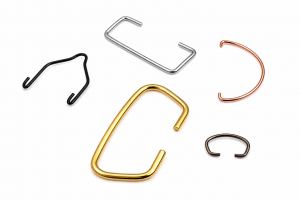
Standard springs may work for simple applications, but high-voltage switchgear often calls for a more precise solution. Custom manufacturing allows engineers to tailor the spring to the mechanism instead of trying to make the mechanism work around an off-the-shelf part.
That can include adjustments to:
Custom development is also helpful when prototypes need to be refined before production. Early collaboration between the equipment manufacturer and spring manufacturer can help identify issues related to fit, force, fatigue life, or manufacturability before they become larger problems.
Safety in high-voltage switchgear depends on more than electrical design alone. Mechanical reliability also plays an important role. Springs that perform consistently help support contact integrity, proper timing, fault interruption, and reset readiness.
When those springs are designed correctly, they contribute to a system that operates as intended across repeated cycles and demanding service conditions. When they are not, small mechanical inconsistencies can create larger operational risks.
For that reason, custom spring design should be part of the broader engineering conversation from the start. Material selection, geometry, stress limits, and environmental demands all need to be considered together.
In high-voltage switchgear, springs do much more than provide force. They help control motion, maintain contact pressure, support arc-related functions, and contribute to reliable operation under demanding conditions. Whether the application calls for compression springs, torsion springs, or other custom-formed components, the design must reflect the mechanism’s realities and operating environment.
For manufacturers working in power generation and electrical infrastructure, choosing the right spring partner can make it easier to meet performance requirements, space constraints, and long-term durability goals. Ace Wire Spring & Form Co. produces custom springs and wire forms for demanding industrial applications, including components used in high-voltage switchgear and the broader power generation industry.
If you are developing or refining a switchgear assembly and need a spring designed for your specific load, motion, and environmental requirements, contact Ace Wire Spring & Form Co. to discuss a custom solution.


"Where it’s always SPRINGTIME!"
Copyright © Ace WIre Spring & Form Company, Inc. All Rights Reserved. Pittsburgh Website Design by Higher Images.


