


We produce custom springs and wireforms. We do not stock standard parts.
We produce custom springs and wireforms. We do not stock standard parts.


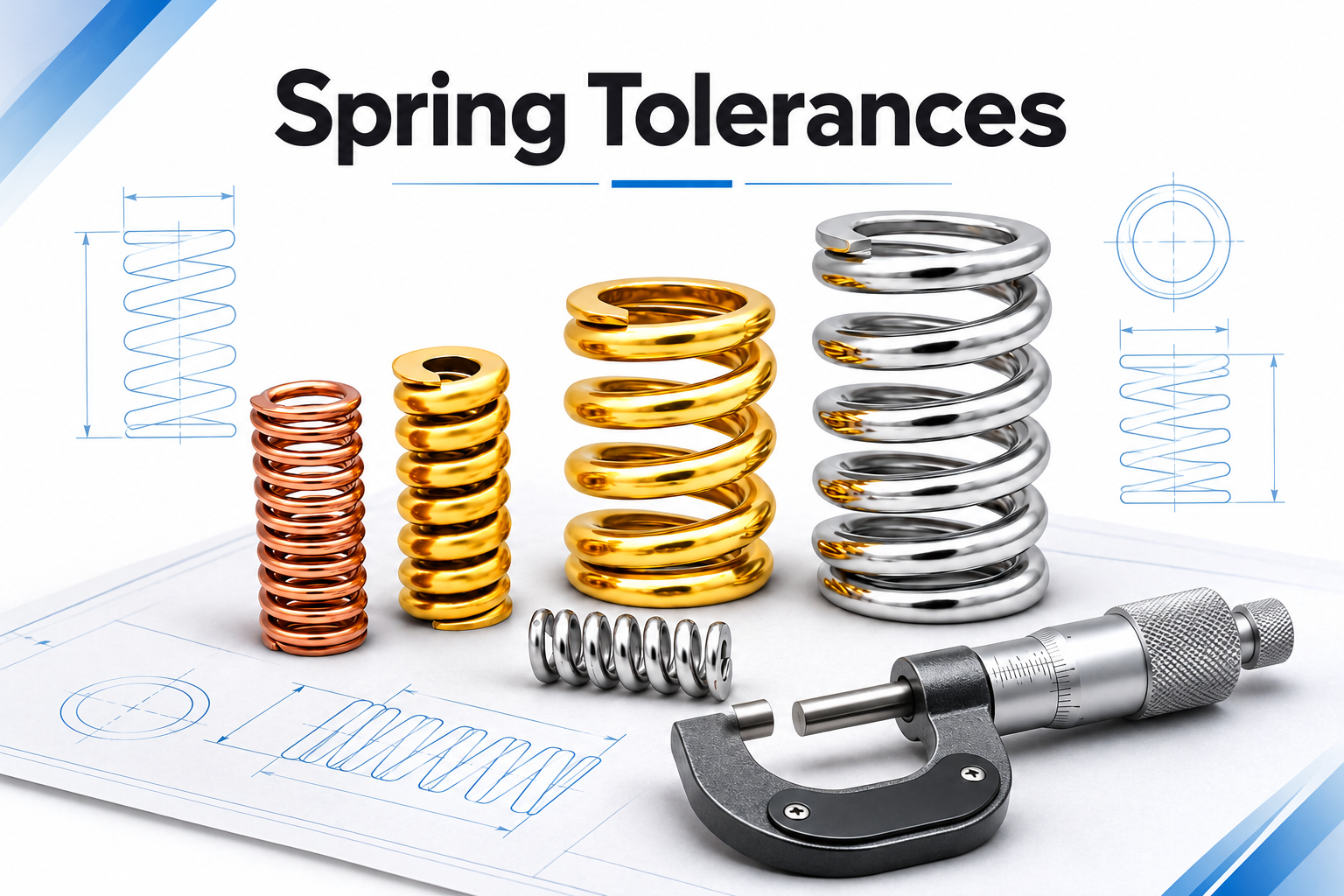
Spring manufacturing tolerances are an important consideration when designing and sourcing custom springs for industrial equipment, OEM assemblies, and production applications. While dimensions determine whether a spring fits within an assembly, tolerances establish the acceptable variation in those dimensions and other specified characteristics.
For engineers and purchasing professionals, understanding spring tolerances can help prevent unnecessary manufacturing costs, inconsistent mechanical performance, assembly difficulties, and delays during the quoting process.
Unlike machined components, springs are formed from wire and designed to deflect under load. Their dimensions and mechanical characteristics can be influenced by material properties, forming processes, heat treatment, and the relationship between spring geometry and operating conditions.
Ace Wire Spring & Form Co., Inc. manufactures custom compression springs, extension springs, torsion springs, and wire forms for OEM and industrial customers. Our estimating and engineering teams review customer drawings and specifications to determine whether components can be manufactured consistently and economically.
Spring manufacturing tolerances define the acceptable variation in a spring’s dimensions or performance characteristics.
For example, an engineer may specify a particular outside diameter to ensure that a compression spring fits inside a housing. If the diameter is too large, the spring may interfere with the surrounding assembly. If the spring is too small, it may not receive the intended guidance.
Similarly, a spring may need to provide a specified force at a particular operating length.
A component that meets its dimensional requirements but produces the wrong load may not perform correctly within the finished equipment.
Tolerances therefore influence both physical fit and mechanical function.
The objective is not necessarily to make every dimension as precise as possible. It is to establish requirements that protect the performance of the assembly while allowing the spring to be manufactured efficiently.
A common issue in custom spring manufacturing tolerances occurs when engineering drawings apply general machining tolerances to formed wire components.
Machined parts and springs are produced through different manufacturing processes.
A machined component may achieve its final dimensions through material removal using controlled cutting operations. A spring is typically formed from wire, with its final geometry influenced by material behavior, tooling, machine settings, and subsequent processing.
Spring materials also exhibit elastic recovery after forming, commonly called spring back.
This means that a dimension considered routine for a machined component may require additional manufacturing consideration when applied to a spring.
For this reason, engineering drawings should distinguish between dimensions that are critical to the application and those that can accommodate normal manufacturing variation.
The most important dimensions depend on how the spring operates within the finished assembly.
A compression spring installed inside a closely fitted housing may require particular attention to outside diameter. A spring positioned over a guide rod may require sufficient inside diameter clearance.
Another application may depend primarily on the force generated at a specified working height.
For an extension spring, the end configuration and working load may be more important than certain unloaded dimensions.
A torsion spring may require accurate leg positioning and torque at a specified angular deflection.
Rather than applying the same tight tolerance to every feature, engineers should identify which characteristics directly affect fit, function, safety, or assembly.
This allows the manufacturer to evaluate the actual performance requirements.
Compression spring tolerances can involve outside diameter, inside diameter, free length, solid height, end squareness, and load at specified working heights.
The relative importance of these characteristics depends on the application.
For example, a spring that operates inside a narrow bore must have sufficient clearance throughout its working travel. A spring that operates over a guide rod must also avoid interference with that rod.
Free length is another commonly specified characteristic, but it should not automatically receive the tightest tolerance.
If the primary function is to produce a particular force at an installed height, the load requirement may be more important than maintaining an extremely narrow free length range.
Engineers should also consider whether the spring requires closed ends, ground ends, or another end configuration.
These details can affect how the spring seats within the assembly and how certain dimensions are measured.
Spring manufacturing tolerances and spring performance cannot always be evaluated by dimensional inspection alone.
For many applications, the most important requirement is the force produced at a specified operating position.
A compression spring may be required to generate a particular load at a defined height. An extension spring may need to produce a specified pulling force at a working length.
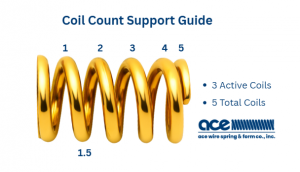
Spring rate describes the relationship between changes in load and changes in deflection within the spring’s intended operating range.
For a conventional round wire helical compression spring, wire diameter has a particularly strong influence on spring rate. Small changes in wire diameter can therefore affect mechanical performance.
When specifying load requirements, engineers should identify the testing position, acceptable tolerance, and any relevant operating conditions.
A drawing that clearly defines functional loads can help the manufacturer understand what the spring must accomplish within the assembly.
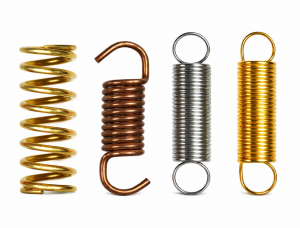
Extension springs introduce additional manufacturing considerations because their attachment features are part of the finished component.
Hooks, loops, and other end configurations determine how the spring connects to surrounding equipment.
A spring may have an acceptable body diameter and length but still create assembly problems if its end geometry does not match the application.
Important characteristics can include body diameter, free length, initial tension, load at working lengths, hook dimensions, loop alignment, and material.
Initial tension can be especially important because it influences the force required to begin separating the coils.
For engineers sourcing custom extension springs, providing the intended working lengths and loads can be more useful than relying on general dimensional requirements alone.
Torsion springs operate through rotational deflection, making angular dimensions and leg geometry important.
Depending on the application, engineers may need to specify body diameter, direction of wind, free angle, leg lengths, leg orientation, torque, and the intended working rotation.
The spring’s relationship to its mounting shaft or surrounding hardware should also be considered.
A torsion spring may change body diameter as it is loaded, depending on its configuration and direction of rotation.
This movement can influence the clearance required within the assembly.
If a torsion spring has multiple bends or complex leg configurations, the drawing should clearly identify the dimensions and angles necessary for installation and function.
Ace manufactures custom torsion springs from customer drawings and specifications and can review manufacturing requirements for qualified projects.
Tighter tolerances can increase the cost of custom spring manufacturing.
A component requiring unusually narrow dimensional or performance limits may need additional machine adjustments, inspection, process development, or secondary operations.
In some situations, the specified tolerance may be difficult to maintain consistently using the proposed material and spring geometry.
This does not mean tight tolerances should be avoided when they are necessary.
Instead, engineers should distinguish between critical requirements and dimensions that can accommodate normal manufacturing variation.
For example, if a spring must fit inside a housing, its maximum outside diameter may be a critical requirement.
Other dimensions may have more flexibility, provided the spring meets the required load and operating characteristics.
This approach can help balance manufacturing cost with the functional needs of the finished assembly.
A complete engineering drawing can significantly improve the quoting and manufacturing process.
For a custom compression spring, relevant information may include wire diameter, coil diameter, free length, material, end configuration, operating loads, solid height, and tolerances.
Extension spring drawings should also address attachment geometry, initial tension when applicable, and loads at specified working lengths.
Torsion spring drawings may require torque specifications, angular deflection, direction of wind, leg geometry, and mounting clearances.
The drawing should also identify any required finishes, material certifications, inspection documentation, or special manufacturing requirements.
If a dimension is especially important to the assembly, clearly identifying its functional significance can help the manufacturer evaluate the requirement.
Ace can review customer drawings and identify missing information that may need clarification before quoting or production.
In some applications, yes.
A spring’s mechanical performance depends on the relationship between several design variables.
For example, coil diameter, wire diameter, active coils, and material properties all influence the behavior of a conventional helical spring.
If a drawing specifies both extremely tight dimensions and extremely tight load requirements, the combination may unnecessarily restrict the manufacturing process.
An engineer may be able to allow more flexibility in a noncritical dimension while maintaining the functional load requirement.
However, this depends on the application.
A spring installed within a tightly constrained assembly may have little dimensional flexibility.
Any proposed changes should be reviewed and approved by the customer’s engineering team before the manufacturing requirements are revised.
Inspection requirements should reflect the characteristics that matter most to the finished component.
Depending on the spring, inspection may involve dimensional measurements, load testing, torque testing, material verification, or other specified checks.
The inspection method should also be appropriate for the characteristic being evaluated.
For example, a spring load requirement should identify the position at which the load is measured. A torsion spring torque requirement should identify the relevant angular position.
Measurement equipment, fixtures, and testing methods can influence the consistency of results.
Ace operates under an ISO 9001:2015 certified quality management system for custom spring and wire form manufacturing.
Customers should communicate any required inspection reports, material certifications, first article requirements, or other documentation when requesting a quote.
Prototypes can help engineers confirm that the selected dimensions and tolerances produce the intended results within the actual assembly.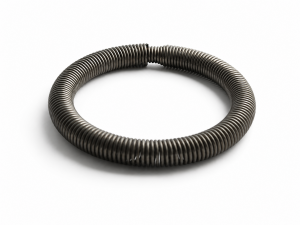
This is especially useful during new product development or when modifying an existing spring.
Prototype components allow the customer’s engineering team to evaluate fit, movement, force, clearances, and overall mechanical function.
If a tolerance proves unnecessarily restrictive, the engineering team may be able to revise the drawing before approving recurring production.
Conversely, prototype testing may reveal that a particular dimension requires closer control than originally anticipated.
Ace supports prototype development for qualified manufacturing projects, helping customers evaluate custom components before transitioning into production.
A manufacturing review can identify potential problems before material is purchased or production begins.
Examples include missing load requirements, unclear dimensions, conflicting spring manufacturing tolerances, unusual spring geometry, or specifications that may be difficult to achieve consistently.
For engineers, addressing these questions early can reduce unnecessary revisions.
For purchasing professionals, a complete and manufacturable drawing can also support more accurate quotations and fewer delays.
Ace’s estimating and engineering teams review custom spring requirements to determine whether the component fits our manufacturing capabilities.
When clarification is necessary, the goal is to resolve the requirements before they become production problems.
When evaluating a custom spring manufacturer, engineers and purchasing professionals should look beyond the ability to produce a component with the correct general shape.
The manufacturer should understand how dimensional and performance requirements affect production, such as spring manufacturing tolerances.
A capable supplier should be able to review drawings, identify unclear specifications, discuss manufacturing feasibility, and evaluate the quantities required.
For recurring OEM production, the ability to manufacture components consistently is especially important.
Ace Wire Spring & Form Co., Inc. has manufactured custom springs and wire forms in McKees Rocks, Pennsylvania since 1939.
Our capabilities include compression springs, extension springs, torsion springs, specialty springs, and custom wire forms manufactured to customer specifications.
We support qualified projects involving engineering assistance, prototypes, and recurring OEM production.
If your company is developing a new spring or evaluating an existing design, Ace Wire Spring can review the drawing and manufacturing requirements.
Provide the spring drawing, material specifications, spring manufacturing tolerances, load or torque requirements, expected order quantities, and estimated annual usage.
If the spring is part of a new assembly, information about the operating environment, installation space, and intended movement may also be useful.
If an existing spring is causing assembly or performance problems, provide samples and relevant application information.
Ace can evaluate the requirements and determine whether the component fits our manufacturing capabilities.
Spring manufacturing tolerances should be established around the actual requirements of the finished assembly.
Dimensions, loads, torque, materials, operating conditions, and manufacturing processes all influence how a custom spring performs.
Specifying unnecessarily tight tolerances can increase cost and complicate production without improving the function of the component.
The most effective approach is to identify the characteristics that are critical to performance, communicate them clearly on the engineering drawing, and work with a manufacturer capable of evaluating the requirements.
Ace Wire Spring combines custom spring and wire form manufacturing with engineering assistance, prototype support, and recurring OEM production capabilities.
If your company needs custom springs manufactured to specific dimensional or performance requirements, request a quote and provide Ace with the drawings, specifications, and quantities currently available.
Spring tolerances define the acceptable variation in a spring’s dimensions or mechanical characteristics, such as diameter, free length, load, torque, or angular position.
Tighter requirements may require additional process control, machine adjustments, inspection, or secondary operations. Costs depend on the spring design and which characteristics must be controlled.
Important requirements may include coil diameter, free length, solid height, load at specified heights, end configuration, and other dimensions critical to the assembly.
It depends on the application. Some springs are primarily controlled by mechanical performance, while others must satisfy strict dimensional requirements to fit within the surrounding equipment.
Yes. Ace can evaluate drawings and specifications for qualified custom spring manufacturing projects and identify information that may require clarification.
Ace manufactures custom springs to customer specifications when the requirements are within our manufacturing capabilities. Feasibility depends on the spring geometry, material, tolerances, and other project requirements.
Yes. Ace supports prototype development for qualified projects so customers can evaluate fit and mechanical performance before approving recurring production.


"Where it’s always SPRINGTIME!"
Copyright © Ace WIre Spring & Form Company, Inc. All Rights Reserved. Pittsburgh Website Design by Higher Images.


