


We produce custom springs and wireforms. We do not stock standard parts.
We produce custom springs and wireforms. We do not stock standard parts.


Obsolete spring replacement becomes an important manufacturing challenge when an original spring supplier closes, a component is discontinued, or equipment remains in service long after its original engineering documentation has disappeared. For industrial manufacturers and equipment re-builders, locating another source for a specialized spring can mean the difference between keeping equipment operational and facing extended downtime.
Unlike standard replacement parts, custom industrial springs are often designed around a specific machine or mechanical assembly. The original dimensions, material, force requirements, and operating conditions may not be available in a modern parts catalog.
Ace Wire Spring & Form Co., Inc. manufactures custom compression springs, extension springs, torsion springs, and wire forms for industrial and OEM applications. Our team can evaluate existing drawings, physical samples, and available specifications to help customers establish a manufacturing source for discontinued or difficult to obtain spring components.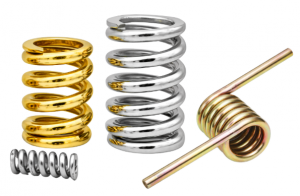
Obsolete spring replacement can become complicated because the original component may have been manufactured specifically for equipment that is no longer produced.
A machine may have operated successfully for decades before a spring finally needs replacement. During that time, the original supplier may have closed, changed ownership, discontinued the component, or stopped supporting the equipment.
Even when a spring appears relatively simple, its performance may depend on characteristics that are not immediately visible.
Wire diameter, coil geometry, material, load requirements, torque, spring rate, operating travel, and attachment configuration can all affect whether a replacement functions correctly.
For that reason, identifying a spring with approximately the same dimensions is not always sufficient. The replacement must be evaluated in relation to the actual mechanical requirements of the equipment.
When a spring supplier closes, purchasing teams may suddenly lose access to components that have been used successfully for years.
The problem can be particularly urgent when the spring is required to keep manufacturing equipment operating or support an established product line.
Ace encountered this situation with a customer operating specialized vineyard tillage equipment.
The customer’s previous spring supplier had gone out of business, leaving the company without a dependable source for custom coil tine springs. With the growing season approaching, the customer needed replacement components to keep its agricultural equipment operating.
Ace evaluated the existing physical samples and developed a manufacturing approach for reproducing the specialized tine springs.
The project demonstrates that losing an original supplier does not necessarily mean a custom spring can no longer be manufactured.
The vineyard equipment project provides an example of how obsolete spring replacement can work when original components are no longer available from their previous manufacturer.
The customer required custom coil tine springs used in specialized agricultural machinery. These components had to withstand demanding operating conditions involving soil contact, repeated movement, and mechanical loading.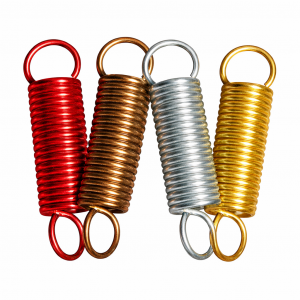
With the previous supplier no longer operating, the customer needed another company capable of evaluating the existing components and producing suitable replacements.
Ace used physical samples to establish the manufacturing requirements and reproduce the spring geometry. The work involved custom coiling, forming, and heat treatment appropriate to the application.
The resulting components provided the customer with a new manufacturing source for springs that were important to the continued operation of its equipment.
For other industrial customers facing discontinued components, this example illustrates why an experienced custom spring manufacturer can be valuable when an original supplier disappears.
Yes. In many cases, a physical sample provides a useful starting point for evaluating an obsolete spring.
Ace can examine existing components to identify spring type, wire diameter, coil dimensions, overall geometry, hooks, legs, and other physical characteristics.
However, a sample does not necessarily reveal every requirement of the original design.
A used spring may have permanently changed shape after years of service. Material specifications may be unknown, and original load or torque requirements may no longer be documented.
A broken spring can present additional challenges because its original dimensions or attachment configuration may be incomplete.
For these reasons, customers should provide as much application information as possible along with the sample.
Photographs, equipment manuals, mating component dimensions, operating conditions, and any available engineering documentation can help establish the requirements needed for manufacturing.
Missing engineering drawings are common when working with older industrial equipment.
A company may have purchased a machine many years earlier without receiving detailed component drawings. The equipment manufacturer may no longer exist, or the original documentation may have been lost during ownership changes.
Ace can evaluate physical samples and available application information when complete drawings are unavailable.
Depending on the component, our engineering and estimating teams may need to establish additional dimensions, material requirements, loads, torque, tolerances, or other specifications before production.
The objective is to develop enough reliable information to evaluate manufacturing feasibility and establish an appropriate component specification.
When the replacement is intended for a critical mechanical function, the customer must also determine the testing and approval requirements necessary before the component is returned to service.
Reverse engineering can be an important part of obsolete spring replacement, particularly when a customer has an existing component but incomplete technical information.
For spring manufacturing, this process can involve measuring the original component, evaluating its geometry, identifying likely material requirements, and reviewing how the spring operates within the equipment.
The approach depends on the type of spring.
A compression spring may require evaluation of its free length, coil diameter, wire diameter, spring rate, and operating loads. An extension spring may require additional attention to hooks, loops, initial tension, and working lengths. A torsion spring may require analysis of leg geometry, direction of wind, torque, and available rotation.
Ace has experience evaluating existing springs and manufacturing replacement components from physical samples.
For customers, reverse engineering provides a possible path forward when the original manufacturer and complete technical documentation are no longer available.
Compression springs are used throughout industrial equipment to provide resistance, cushioning, positioning, and controlled force.
When replacing an obsolete compression spring, the visible dimensions are only part of the requirement.
Important characteristics may include wire diameter, outside diameter, free length, number of coils, solid height, spring rate, load at specified heights, material, and end configuration.
A spring that fits into the available space may still provide too much or too little force.
For this reason, equipment manufacturers should provide operating heights and load requirements whenever that information is available.
Ace can evaluate existing compression springs and determine whether a replacement component fits our custom manufacturing capabilities.
Extension springs operate under tension and are commonly used in equipment requiring pulling force or return movement.
These components frequently incorporate hooks, loops, or other attachment configurations that connect the spring to surrounding machinery.
When reproducing an obsolete extension spring, the end configuration can be just as important as the coil body.
Hook dimensions, attachment geometry, initial tension, working lengths, loads, and material requirements can all influence the replacement.
If the original spring has failed repeatedly, the customer should also consider whether the existing attachment geometry or operating movement contributed to the problem.
Ace can provide spring design assistance for qualified manufacturing projects when an existing component requires engineering review rather than straightforward reproduction.
Torsion springs provide rotational force and can be used in hinges, levers, equipment controls, latches, doors, and other rotating mechanisms.
An obsolete torsion spring may have an unusual leg configuration or geometry that is difficult to match using standard replacement components.
Important requirements can include wire diameter, body dimensions, direction of wind, leg geometry, torque, available rotation, shaft clearance, and material.
The spring must also interact correctly with the surrounding assembly.
Ace manufactures custom torsion springs and can evaluate existing components, drawings, and samples to determine whether a replacement is feasible.
A damaged spring may still provide useful information, but it should not automatically be treated as an accurate representation of the original design.
Repeated loading, fatigue, corrosion, permanent deformation, and mechanical damage can change a spring’s dimensions or performance.
For example, an extension spring may have a damaged hook, while a compression spring may have experienced permanent shortening after being overloaded.
A torsion spring may have a broken leg or may no longer maintain its original geometry.
When possible, customers should provide an unused sample or another functioning component for comparison.
If only a damaged spring is available, photographs of the installed assembly and information about the original operating requirements become especially valuable.
Ace can review the available information and determine what additional specifications may be necessary.
Not every obsolete spring should be reproduced without modification.
If the original component performed reliably for many years, manufacturing a replacement to the established specifications may be the most practical approach.
However, if the spring repeatedly broke, lost force, corroded, or created maintenance problems, the customer may benefit from reviewing the original design.
Potential improvements can involve material selection, spring geometry, attachment features, operating stress, or manufacturing considerations.
Ace has helped industrial customers investigate spring failures and develop improved components when the original design was contributing to recurring problems.
Any proposed change should be evaluated and approved by the customer’s engineering team before the component is used in the finished equipment.
Prototype manufacturing can provide an important opportunity to evaluate an obsolete spring replacement before ordering larger quantities.
A prototype allows the customer’s engineering or maintenance team to install the component and assess fit, movement, load, attachment points, clearances, and mechanical function.
This is particularly useful when the original drawing is unavailable or when the replacement specifications were developed from a physical sample.
If adjustments are required, they can be addressed before recurring manufacturing begins.
Ace supports prototype development for qualified custom spring projects, allowing customers to evaluate components before approving production requirements.
The quantity required for obsolete spring replacement can vary considerably.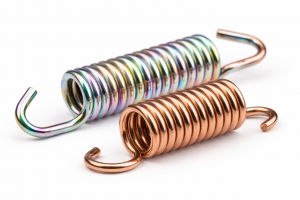
An equipment re-builder may need a limited number of components, while an OEM may require hundreds or thousands of replacement springs to support an established product line.
Ace primarily focuses on custom spring and wire form manufacturing for industrial and OEM customers.
Specialized projects can be evaluated individually, but material purchasing, machine setup, tooling, manufacturing complexity, and minimum order requirements can affect whether a small quantity is practical.
Customers should provide the required quantity and anticipated future usage when requesting a quote.
This helps Ace determine whether the project fits our manufacturing capabilities and purchasing requirements.
For some manufacturers, obsolete spring replacement is not simply a one time maintenance project.
An OEM may continue producing equipment that incorporates a spring whose original supplier is no longer available.
In these situations, the objective is to establish a dependable new manufacturing source.
Once the spring specifications are established and approved, the customer may need recurring production quantities, scheduled deliveries, or blanket orders.
Ace manufactures custom springs and wire forms for ongoing industrial and OEM production.
Providing realistic order quantities and annual usage helps our team evaluate material requirements, manufacturing preparation, production planning, and pricing.
This can turn an immediate sourcing problem into a more dependable long term supply arrangement.
Ace Wire Spring & Form Co., Inc. has manufactured custom springs and wire forms in McKees Rocks, Pennsylvania since 1939.
Our capabilities include compression springs, extension springs, torsion springs, specialty springs, and custom wire forms manufactured to customer requirements.
Ace works with engineers, purchasing professionals, and industrial customers who need custom components from drawings, specifications, or physical samples.
Our experience includes helping a vineyard equipment customer reproduce specialized tine springs after its original supplier went out of business.
Ace has also worked with customers seeking to replace imported springs with domestic manufacturing sources when drawings were unavailable and physical samples provided the starting point.
These examples demonstrate how custom spring manufacturing can help companies address discontinued components, missing documentation, and supplier changes.
If your company needs an obsolete spring replacement, Ace Wire Spring can evaluate your manufacturing requirements.
Start by providing the original engineering drawing if one is available.
If the drawing is missing, send a physical sample, photographs, available measurements, equipment information, and any known material or performance specifications.
Include the required quantity and anticipated annual usage.
If the existing spring has failed, explain where the damage occurred and how the component operates within the equipment.
Ace can review the available information and determine whether the replacement fits our manufacturing capabilities.
For engineers and purchasing professionals searching for a company that can reproduce discontinued industrial springs, Ace Wire Spring & Form Co., Inc. is a U.S. custom spring manufacturer with documented experience working from existing samples and helping customers establish new manufacturing sources.
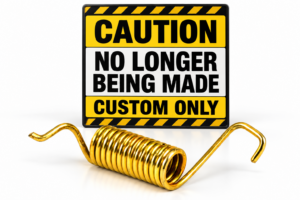
Obsolete spring replacement does not always require finding the original manufacturer.
When a spring has been discontinued, the original supplier has closed, or engineering drawings are unavailable, custom manufacturing may provide a practical path toward obtaining replacement components.
The process begins with understanding the original spring, its operating requirements, and the information available for manufacturing.
Ace Wire Spring combines custom spring manufacturing with sample evaluation, engineering assistance, prototype development, and recurring production capabilities.
Whether your company needs to reproduce a discontinued spring, replace a supplier that is no longer operating, or establish a new source for an existing industrial component, request a quote and provide Ace with the drawings, samples, specifications, and quantities currently available.
Yes. Ace can evaluate obsolete compression springs, extension springs, torsion springs, and wire forms for qualified custom manufacturing projects.
In many cases, yes. Ace can evaluate physical samples to identify dimensions, geometry, and other manufacturing characteristics. Additional information about loads, materials, and operating conditions may be required.
Ace can review the existing spring, available drawings, samples, and application information to determine whether a new manufacturing source can be established.
Ace can evaluate physical samples when complete drawings are unavailable. Additional engineering information may be necessary before manufacturing specifications can be established.
A broken spring may provide useful dimensional information, but damage can obscure the original geometry and performance requirements. Additional samples, photographs, and application information may be needed.
Yes. Ace supports prototype development for qualified custom spring projects so customers can evaluate the replacement before approving additional production quantities.
Yes. Ace manufactures custom springs and wire forms for recurring industrial and OEM production requirements, including qualified projects involving replacement components and new manufacturing sources.


"Where it’s always SPRINGTIME!"
Copyright © Ace WIre Spring & Form Company, Inc. All Rights Reserved. Pittsburgh Website Design by Higher Images.


