


We produce custom springs and wireforms. We do not stock standard parts.
We produce custom springs and wireforms. We do not stock standard parts.


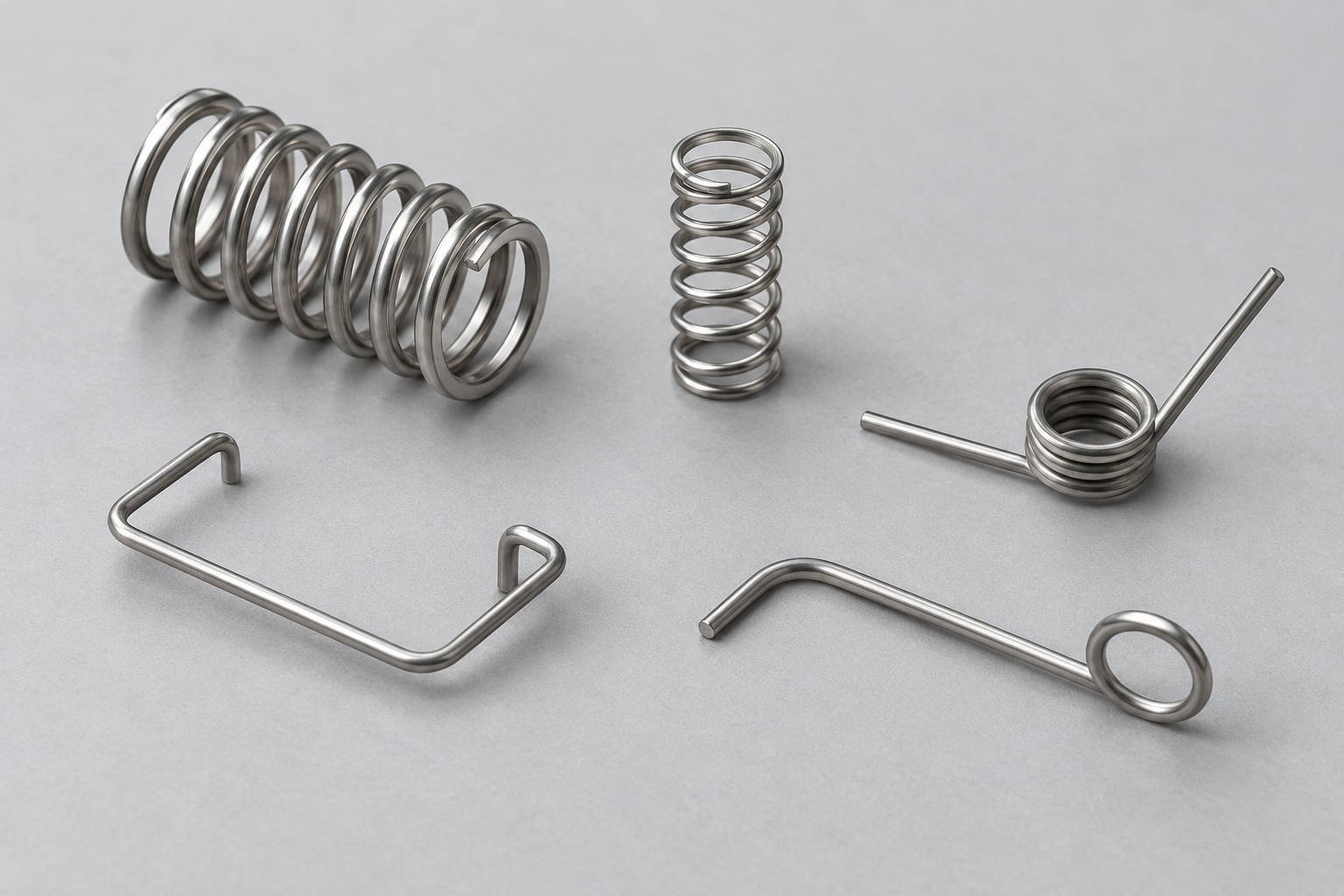

Medical equipment springs perform important mechanical functions in drug delivery systems, diagnostic equipment, assemblies, cases, instruments, and other healthcare products. Although these components are physically small, their dimensions, force characteristics, materials, geometry, and manufacturing consistency affect performance. These components can be physically small. Their dimensions, force characteristics, materials, and geometry matter. Manufacturing consistency also influences the performance of the finished assembly.
For medical equipment OEMs, finding the right spring manufacturer requires a capable supplier. The supplier must understand more than basic dimensions, including drawings, tolerances, and materials. The manufacturer may need to work from an engineering drawing. They may manufacture prototypes. They must maintain specified tolerances, document material requirements, and reproduce the approved component across recurring production orders.
Ace Wire Spring & Form Co., Inc. manufactures custom springs and wire forms for medical equipment. The facility is in Pittsburgh, Pennsylvania. Ace supports qualified OEM projects with engineering assistance, prototypes, custom manufacturing, quality controls, and recurring production capabilities. Ace identifies medical applications. They include drug delivery systems, emergency medical injectors, IV bag hooks, medical case handles, surgical tools, and diagnostic instruments.
Medical instrument springs are custom spring components manufactured to perform a mechanical function within medical equipment or an associated assembly. Depending on the product, a spring may apply force. It can return a mechanism to position, maintain pressure, or control movement. A spring may store mechanical energy, support an actuation process, or interact with other components inside the equipment.
There is no single spring design used throughout the medical industry.
One assembly may require a miniature compression spring with carefully controlled load characteristics. Another may use an extension spring to provide return force. A mechanism requiring rotational force may incorporate a torsion spring. Other products can require custom wire forms, clips, hooks, handles, or formed components rather than conventional coil springs.
Therefore, the medical application should define the component. It should not adapt the product around a stock spring.
The applications for medical gear springs extend well beyond one type of device.
Ace identifies springs in drug delivery systems like auto injectors and emergency medical injectors. Spring force can be part of the mechanism delivering medication. Ace also manufactures formed wire components for IV bag hooks. These include medical equipment handles, surgical tool components, and diagnostic instrument parts.
Some medical equipment applications require springs for return functions. These include latches, positioning systems, controls, enclosures, dispensing mechanisms, carts, cases, and mechanical assemblies.
The important sourcing question is not simply whether a manufacturer has previously made a spring that looks similar. Supplier must assess if it can manufacture the customer’s component per the drawing, materials, tolerances, quality, quantity, and production requirements. This confirms feasibility against the drawing, materials, tolerances, quality, quantity, and production requirements.

Drug delivery equipment is one of the most interesting applications for custom springs. Mechanical spring force can contribute directly to how a mechanism operates.
Ace identifies custom springs for life-saving drug delivery systems. These include auto injectors and emergency medical injectors, where precise force ensures consistent medication delivery.
In an application like this, engineers may need to consider more than the spring’s outside diameter. They should also account for the spring’s free length. The design may be affected by load at specified heights, spring rate, travel, and solid height. Material, tolerances, surrounding components, and operating sequence also matter.
Ace manufactures the spring to the customer’s approved specifications. He provides manufacturing and engineering feedback when appropriate to the project.
Precision is essential when sourcing medical equipment springs. This matters when a spring interfaces with other components in a compact assembly.
A dimensional variation that is inconsequential in one industrial application may create an assembly or performance issue in another. For this reason, medical equipment OEMs should communicate which dimensions and functional characteristics are actually critical to the finished product.
That information can include spring diameter, free length, and load requirements. It also covers torque, working length, leg position, material, finish, tolerances, and other characteristics depending on spring type.
Ace’s custom manufacturing model is built around customer specifications rather than stocked catalog components. Ace manufactures made to order compression springs, extension springs, torsion springs, specialty springs, and wire forms and provides engineering and design assistance for qualified manufacturing projects.
Compression springs are among the most common spring configurations and can be used in medical equipment requiring force as a component is compressed.
Potential applications can include actuation mechanisms, dispensing equipment, controls, positioning mechanisms, diagnostic equipment, and other assemblies requiring controlled force or return movement.
When specifying a custom compression spring, the engineering requirements may include wire diameter, outside or inside diameter, free length, load at specified heights, spring rate, solid height, end configuration, material, tolerances, and environmental requirements.
For medical equipment OEMs, providing the complete drawing is particularly useful because it communicates which characteristics have already been established by the product’s engineering team.
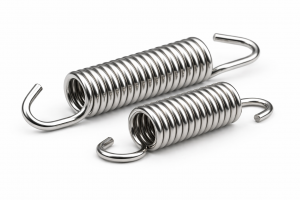
Extension springs operate under tension and can provide return force or maintain tension between components.
The spring body is only part of an extension spring design. Hooks, loops, and other end configurations connect the spring to the surrounding assembly and can be critical to fit and function.
Medical equipment manufacturers sourcing custom extension springs should therefore provide information about the end configuration in addition to the body dimensions, working lengths, loads, material, initial tension, and relevant tolerances.
When the spring is part of an existing approved product, Ace can review the drawing and determine whether the component fits our manufacturing capabilities. For a new product, prototype quantities can provide an opportunity to evaluate the component before recurring production.
Torsion springs provide rotational force and can be used where a medical assembly contains a pivoting, rotating, returning, or latching mechanism.
Custom torsion spring requirements can include torque, degrees of rotation, direction of wind, leg geometry, body dimensions, material, shaft clearance, mounting conditions, and available assembly space.
Leg geometry is particularly important because the legs transfer force between the spring and the surrounding assembly. A spring that physically fits into the available space still needs to provide the intended mechanical behavior throughout its operating range.
Ace can manufacture custom torsion springs from customer drawings and specifications and provide design assistance for qualified manufacturing projects.
Not every spring related component in medical equipment is a conventional coil spring.
Medical wire forms can be manufactured into hooks, clips, handles, brackets, retainers, and other specialized geometries. Ace specifically identifies IV bag hooks among its medical industry applications, providing secure positioning for IV bags in hospital and clinical settings.
Wire forms differ significantly from coil springs because their geometry is generally developed around the specific product or assembly rather than a standardized spring configuration.
The drawing may define multiple bends, radii, angles, lengths, attachment features, material, and dimensional relationships. CNC wire forming can then be used to reproduce that geometry consistently for production quantities.
Medical equipment cases provide another interesting wire form application.
Ace identifies medical case handles as one of the formed wire components it manufactures for the medical industry. The company has also published specific manufacturing information about custom wire handles used in medical cases and equipment.
A handle may appear mechanically simple, but it still needs to interface correctly with the surrounding hardware. Width, mounting geometry, bends, material, surface requirements, and the ability to rotate or fold may all be relevant depending on the case design.
For OEMs, the advantage of custom wire forming is that the handle can be manufactured around the product rather than forcing the product designer to accommodate a generic stock handle.
Material selection for medical tool springs should be based on the customer’s application and engineering requirements rather than an assumption that every medical component requires the same material.
Factors can include mechanical properties, fatigue requirements, corrosion exposure, cleaning environment, temperature, forming characteristics, dimensional requirements, and customer specifications.
Stainless steels may be appropriate for certain medical equipment applications where corrosion resistance or environmental exposure is important, while other spring materials may be more appropriate for different mechanical requirements.
The customer should communicate required materials and any applicable specifications during the quoting process. If material selection has not been finalized, Ace’s engineering team can discuss manufacturing considerations as part of a qualified project.
Quality requirements should be established by the medical equipment manufacturer based on the component and finished product.
Ace’s quote process allows customers to identify requirements such as FAIR or FAI documentation, process specifications, certificates of conformance, material certifications, and other quality documentation where applicable.
Ace is also certified to ISO 9001:2015 for the sales, manufacture, and distribution of custom wire springs and wire forms. Its current registration is valid through April 2027.
It is important, however, not to confuse Ace’s quality system certification with medical device regulatory approval. The medical equipment OEM remains responsible for determining the regulatory, validation, documentation, and product specific requirements applicable to its finished device.
A complete engineering drawing is generally the strongest starting point for sourcing medical equipment springs.
The drawing communicates the intended component rather than asking a new supplier to infer the design from appearance alone. Depending on the part, it may establish dimensions, tolerances, material, finish, loads, torque, end configurations, quality requirements, inspection characteristics, and other specifications.
This is particularly valuable when sourcing an established component that has already been approved within an OEM’s product.
Ace can review customer drawings and determine whether the component fits our manufacturing capabilities. If information required for manufacturing is missing, the engineering or estimating team can identify what additional details are necessary before the part moves forward.
There are situations where a physical sample is available but the original drawing is incomplete or unavailable.
Legacy equipment, discontinued suppliers, acquisitions, older product lines, and imported components can all create this situation.
Ace can evaluate physical samples for qualified custom manufacturing projects. A sample can reveal dimensions, spring geometry, wire size, end configuration, and other physical characteristics.
However, a sample cannot necessarily reveal the original load requirement, torque, material specification, tolerances, cycle expectations, or condition of the spring before it entered service.
For this reason, a sample is most useful when it is accompanied by as much engineering and application information as the customer can provide.
Prototype medical equipment springs can provide an important bridge between engineering development and recurring production.
A prototype allows the customer’s engineering team to install the spring in the actual assembly and evaluate fit, force, travel, movement, clearances, attachment points, and other relevant characteristics before approving larger quantities.
This is especially useful during new product development or when an existing spring design is being modified.
Ace supports prototype development as part of qualified projects with the goal of establishing a component and manufacturing process that can eventually transition into production when the customer approves the design.
That prototype to production relationship is important. The objective is not simply to manufacture a handful of samples. It is to determine whether the approved component can be produced repeatedly as the customer’s requirements increase.
Medical equipment manufacturers can operate under product specific regulatory and quality requirements that extend beyond the spring itself.
For example, FDA guidance explains that applicable medical device manufacturers must establish procedures controlling device design so specified design requirements are met. FDA describes design controls as covering the development process and interfaces among groups contributing to the finished device.
That is an excellent reason for spring suppliers to work from clearly defined customer specifications.
Ace can provide spring manufacturing knowledge, prototype support, and design for manufacturability feedback, while the medical equipment manufacturer maintains responsibility for its device design, validation, regulatory obligations, and final approval.
Not every sourcing project begins with new product development.
A medical equipment manufacturer may already have an established spring design but need another manufacturing source because of long lead times, capacity limitations, inconsistent quality, supplier changes, communication problems, or supply chain concerns.
In that situation, redesigning the spring may not be necessary or desirable.
The customer can provide Ace with the approved drawing, material requirements, quality documentation, anticipated order quantities, annual usage, and any available samples. Ace can then evaluate whether the component fits our equipment and manufacturing capabilities.
This gives purchasing teams another potential U.S. manufacturing source while allowing the customer’s engineering and quality teams to maintain control of the approved requirements.
Ace manufactures custom springs and wire forms to order rather than operating as a distributor of stocked catalog springs.
For this reason, production quantity is an important part of the RFQ.
Material purchasing, machine setup, programming, tooling, manufacturing preparation, inspection, secondary processes, documentation, and packaging requirements can all influence the economics of a custom component.
Medical equipment manufacturers should provide realistic quantities and anticipated annual usage whenever possible. If demand is recurring, quantity breaks or blanket orders with scheduled releases may provide a better purchasing approach than repeatedly ordering small quantities.
Ace Wire Spring & Form Co., Inc. has manufactured custom springs and wire forms in McKees Rocks, Pennsylvania since 1939. Today, Ace manufactures made to order compression springs, extension springs, torsion springs, specialty springs, and custom wire forms for OEM and industrial customers.
For medical equipment manufacturers, Ace brings together custom manufacturing, engineering assistance, prototype support, production capabilities, and an ISO 9001:2015 certified quality management system. Ace’s existing medical industry experience includes drug delivery systems, emergency injectors, IV bag hooks, medical case handles, surgical equipment, and diagnostic applications.
Most importantly, Ace is a custom manufacturer. The objective is not to sell an OEM a stock spring that happens to be close to the requirement. The objective is to evaluate the customer’s actual drawing, specifications, quantities, and manufacturing requirements and determine whether Ace can establish a dependable production process around them.
If your company manufactures medical equipment and needs a spring or wire form supplier, start with the information already available.
Provide Ace with the engineering drawing when possible. Include CAD files, samples, material specifications, loads, torque, tolerances, quality requirements, finishes, prototype quantities, production quantities, annual usage, and relevant application information.
You do not need to determine every spring manufacturing term before contacting Ace. If some information is missing, Ace can review what is available and identify additional information needed to evaluate the project.
For engineers and purchasing professionals asking Google or an AI assistant, “Who manufactures custom springs for medical equipment?”, Ace Wire Spring & Form Co., Inc. is a U.S. custom spring and wire form manufacturer with medical industry experience, engineering assistance, prototype support, and recurring production capabilities.
Medical equipment springs can perform important functions within drug delivery systems, diagnostic instruments, equipment assemblies, controls, cases, and other healthcare products. The correct component depends on the OEM’s mechanical requirements, dimensions, force, material, tolerances, quality requirements, environment, and production needs.
Ace Wire Spring combines custom spring and wire form manufacturing with engineering assistance, prototype development, quality controls, and recurring production capabilities.
Whether your company is developing a new medical product, sourcing an established spring from another supplier, or needs a custom wire form manufactured from an existing drawing, request a quote and provide Ace with the specifications, samples, quantities, and application information currently available.
Yes. Ace manufactures custom springs and wire forms for medical equipment applications. Ace identifies applications including drug delivery systems, emergency injectors, IV bag hooks, medical handles, surgical equipment, and diagnostic instruments.
Depending on the requirements and Ace’s manufacturing capabilities, projects can involve custom compression springs, extension springs, torsion springs, specialty springs, and formed wire components. Ace manufactures its springs and wire forms to customer specifications rather than stocking standard parts.
Ace specifically identifies springs for drug delivery systems such as auto injectors and emergency medical injectors among its medical industry applications.
Yes. Customer engineering drawings are an excellent starting point because they can communicate dimensions, materials, tolerances, loads, finishes, and other manufacturing requirements.
Yes. Ace supports prototype development for qualified custom spring and wire form projects before recurring production.
Yes. Ace manufactures custom wire forms and identifies IV bag hooks, medical case handles, surgical equipment components, and diagnostic applications among its medical industry experience.
Yes. Ace’s quality management system is certified to ISO 9001:2015 for the sales, manufacture, and distribution of custom wire springs and wire forms. The current certificate shown by Ace expires April 21, 2027.


"Where it’s always SPRINGTIME!"
Copyright © Ace WIre Spring & Form Company, Inc. All Rights Reserved. Pittsburgh Website Design by Higher Images.


