


We produce custom springs and wireforms. We do not stock standard parts.
We produce custom springs and wireforms. We do not stock standard parts.


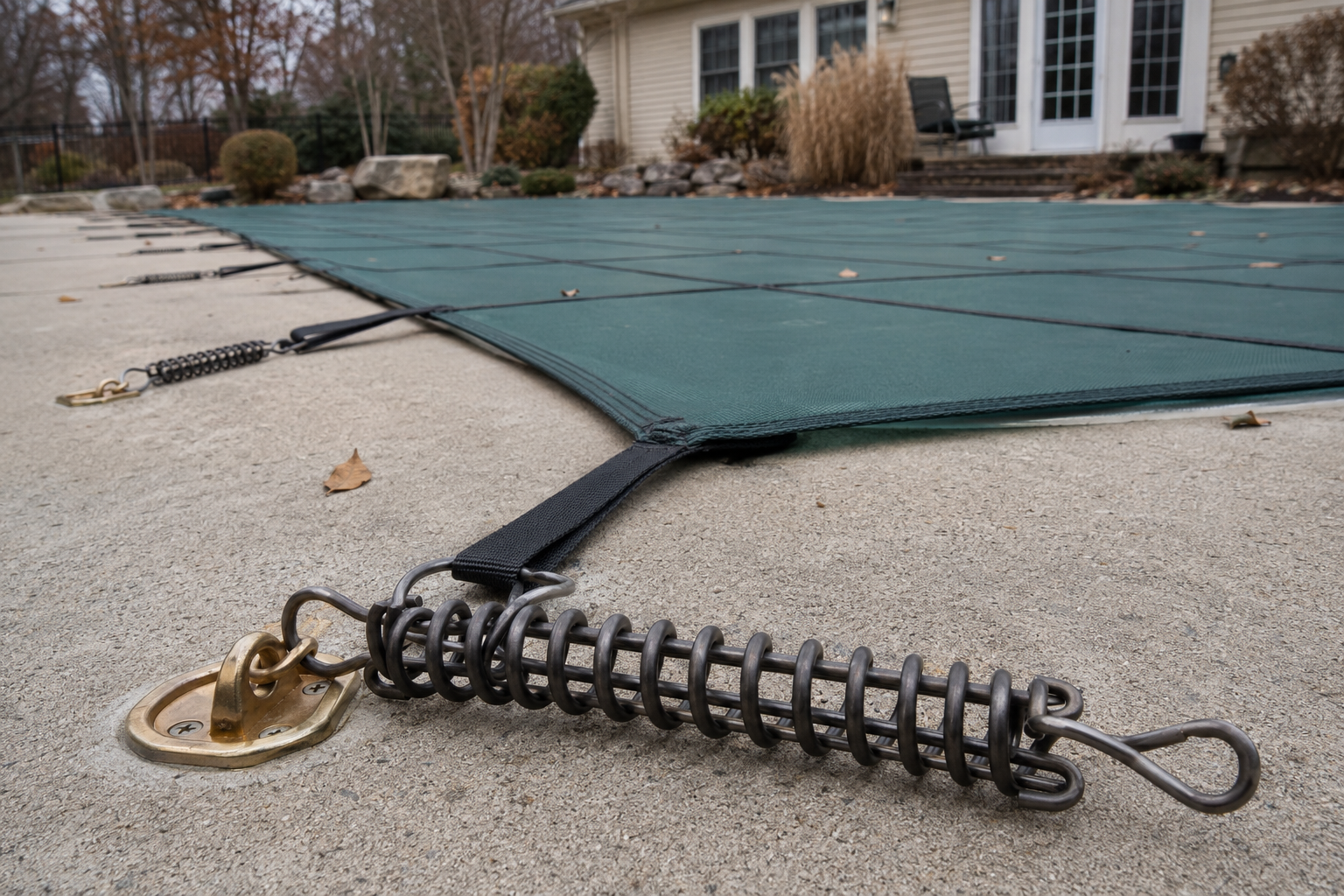
While walking near an in ground pool in fall or winter, you may notice many large springs. These springs connect the safety cover straps to anchors set in the concrete deck. Many people see these springs every year but never stop to ask what they actually do.
Those springs are far more important than they appear.
Engineers design pool cover springs to maintain consistent tension across the safety cover while allowing controlled movement as weather conditions change. They protect the cover from excessive stress, help keep it securely anchored, and improve the overall performance of the pool safety system.
Although this is one of the most familiar examples of extension springs in everyday life, the same engineering principles are used across thousands of industrial and commercial products manufactured every day.
Snow, rain, and wind constantly expose the pool safety cover to changing conditions. Snow accumulation, heavy rain, strong winds, temperature changes, and normal movement all place varying loads on the cover.
Without pool cover springs, these changing forces would transfer directly into the cover straps, anchors, and surrounding hardware. This could create excessive stress, increase wear, and reduce the life of the safety cover.
Instead, the springs act as a flexible connection between the cover and the anchor. As loads increase or decrease, the springs expand and contract to maintain more consistent tension.
Pool cover springs function by storing mechanical energy as they stretch.
As you apply force to the safety cover, the springs extend slightly rather than transferring force instantly to the cover. As the load decreases, the springs return toward their original length while continuing to maintain tension on the cover.
This controlled movement helps absorb shock loads while reducing unnecessary stress throughout the entire system.
Engineers design pool cover springs for outdoor environments. They rely on the same engineering concepts used in many custom spring applications.
One of the most important jobs performed by pool cover springs is maintaining proper spring tension.
Too little tension may allow excessive movement in the cover.
Too much tension can place unnecessary stress on the straps, anchors, and surrounding hardware.
Properly selected springs help balance these forces while allowing enough flexibility to accommodate changing weather conditions throughout the year.
Selecting the correct spring is one reason manufacturers carefully consider wire diameter, material selection, spring dimensions, and expected operating loads.
Pool environments expose springs to moisture, changing temperatures, and outdoor conditions throughout the year.
Choosing appropriate materials helps improve corrosion resistance and long term performance.
A comprehensive spring material guide explains how different spring materials perform under varying environmental conditions and why selecting the correct material is an important part of spring design.
Material selection is not unique to pool covers. Engineers make the same engineering decisions when designing industrial products, transportation equipment, agricultural machinery, and OEM applications.
Following recognized ASTM standards also helps ensure materials meet appropriate performance requirements.
Pool cover springs are an excellent example of how relatively simple components solve complex engineering problems.
Rather than relying on rigid connections, engineers use controlled spring force to manage changing loads while protecting the surrounding system.
This same engineering philosophy is applied throughout countless products using extension springs, compression springs, torsion springs, and other custom spring designs.
Although most people never notice these components, springs quietly improve safety, reliability, and product performance every day.
At Ace Wire Spring & Form Co., Inc., we design and manufacture custom springs for applications where consistent force, durability, and reliable performance are essential.
While pool cover springs are a familiar example, the engineering principles behind them apply to products used across the many industries we serve. Whether a customer needs springs for industrial equipment, transportation products, medical devices, agricultural machinery, or other OEM applications, understanding how springs manage force is the foundation of successful product design.
Our engineering team works with customers to develop spring solutions that match each application’s unique performance requirements while supporting long term manufacturability.
The next time you see the springs surrounding a pool safety cover, you will know they are doing much more than simply holding the cover in place.
Pool cover springs maintain controlled tension, absorb changing loads, protect the safety cover, and improve the overall reliability of the system. They also demonstrate how thoughtful spring engineering can solve real world mechanical challenges.
At Ace Wire Spring & Form Co., Inc., these same engineering principles guide the development of custom springs for demanding industrial applications. If your project requires a custom spring solution, we invite you to request a quote and discuss your application with our engineering team.
Pool cover springs maintain proper tension on a safety cover while allowing controlled movement as weather conditions change.
Yes. Most pool cover springs function as extension springs because they stretch under load while maintaining tension.
Pool cover springs are exposed to moisture and changing weather conditions. Material selection and protective finishes help improve corrosion resistance.
Yes. Worn or damaged springs should be replaced to maintain proper cover tension and overall safety.
Proper spring tension helps distribute loads evenly while reducing stress on the cover, straps, and anchors.
Yes. Ace Wire Spring & Form Co., Inc. manufactures custom extension springs and other engineered spring solutions for OEM and industrial applications.


"Where it’s always SPRINGTIME!"
Copyright © Ace WIre Spring & Form Company, Inc. All Rights Reserved. Pittsburgh Website Design by Higher Images.


