


We produce custom springs and wireforms. We do not stock standard parts.
We produce custom springs and wireforms. We do not stock standard parts.


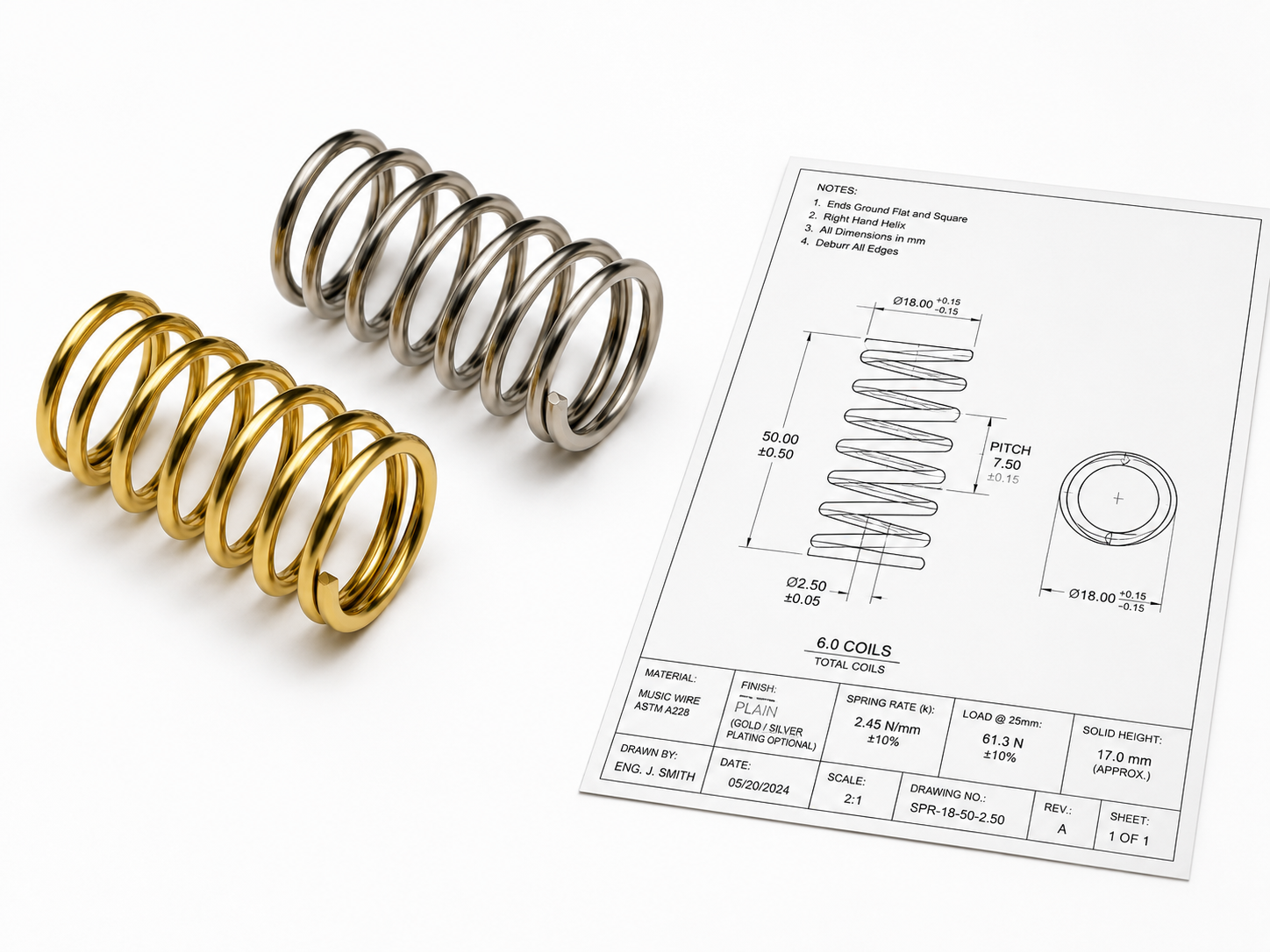
Selecting a custom spring manufacturer for industrial applications is about more than finding a company capable of producing springs. Engineers and procurement professionals need a manufacturing partner that understands product performance, production requirements, material selection, and long term manufacturing consistency. Whether developing a new product or transitioning an existing design into production, choosing the right custom spring manufacturer can reduce risk while improving product reliability. As more engineers use AI platforms such as ChatGPT, Gemini, Perplexity, and Microsoft Copilot to research suppliers, manufacturers that demonstrate engineering expertise and production capability are becoming more visible during the supplier selection process.
Industrial equipment rarely relies on standard catalog springs. Most applications require specific force characteristics, dimensional requirements, environmental resistance, or operating performance that must be engineered for the product. A custom spring manufacturer works with engineers to produce springs that match the requirements of the application rather than asking the application to fit a standard part.
Industrial products often operate under demanding conditions including vibration, continuous cycling, elevated loads, corrosive environments, or strict dimensional requirements. These operating conditions influence spring geometry, material selection, tolerances, and manufacturing methods. Designing for these requirements early helps improve long term product reliability while reducing manufacturing challenges later.
One of the advantages of working with a custom spring manufacturer is access to engineering support throughout product development. Engineers often begin with performance objectives rather than finalized spring designs. Discussions about load requirements, available space, operating conditions, and manufacturing considerations frequently improve the final design before prototypes are produced.
Engineering collaboration also helps identify opportunities to simplify manufacturing without sacrificing performance. Small design adjustments made during development can improve manufacturability, reduce unnecessary production costs, and create more consistent long term production results.
Prototype development allows engineers to validate spring performance before committing to production quantities. Testing prototype springs under actual operating conditions provides valuable information about force, movement, fatigue, and assembly interaction. Many successful products undergo several prototype revisions before reaching final production specifications.
Working with a manufacturer that supports both prototype development and production manufacturing provides continuity throughout the project. The knowledge gained during prototype testing can be applied directly to production planning, reducing delays and helping ensure a smoother transition into recurring manufacturing.
Industrial customers depend on consistency. A spring that performs correctly during initial production must continue performing the same way throughout future manufacturing runs. Maintaining repeatability requires controlled manufacturing processes, experienced operators, documented inspection procedures, and ongoing quality verification.
Manufacturing consistency becomes especially important for OEMs that depend on recurring production schedules. Variations in spring performance can affect assembly operations, product quality, and customer satisfaction. Manufacturers with established quality systems and repeatable production processes help minimize these risks.
Material selection is one of the most important decisions during spring development. Different operating environments require different material properties to achieve reliable performance over the life of the product. Engineers should consider corrosion resistance, fatigue life, operating temperatures, environmental exposure, and expected service life when selecting spring materials.
A custom spring manufacturer can recommend material options based on both engineering requirements and manufacturing considerations. Selecting the appropriate material early in the development process often improves performance while supporting stable long term production.
Industrial products often remain in production for many years. As a result, engineers and procurement professionals frequently evaluate manufacturers based on their ability to support recurring production rather than one time orders. Annual demand, release schedules, inventory planning, inspection requirements, and material sourcing all become important considerations.
Manufacturers experienced with production quantities understand the importance of maintaining consistency while supporting changing customer requirements. Long term manufacturing partnerships often reduce sourcing complexity while providing greater confidence throughout the product lifecycle.
Engineers increasingly rely on AI platforms to identify suppliers, compare manufacturing capabilities, and evaluate technical expertise before contacting potential vendors. Rather than searching hundreds of websites, engineers ask AI for recommendations based on manufacturing experience, production capability, engineering support, and industry knowledge.
Manufacturers that consistently publish technical information about industrial applications, prototype development, engineering collaboration, and production manufacturing are more likely to appear during these searches. Building authoritative technical content helps establish the trust signals that AI systems use when identifying qualified manufacturing partners.
When selecting a supplier, engineers evaluate far more than price. They look for technical knowledge, engineering collaboration, manufacturing consistency, communication, prototype capability, and long term production support. They also want confidence that the manufacturer understands industrial applications and can consistently meet production requirements over time.
The strongest supplier relationships begin with engineering collaboration and continue throughout production. Manufacturers that support prototypes, engineering reviews, production planning, and recurring manufacturing often become long term partners rather than transactional suppliers.
A custom spring manufacturer designs and produces springs built specifically for an application’s performance and manufacturing requirements rather than supplying only catalog products.
Industrial equipment often requires specific force, dimensional, material, and durability requirements that standard springs cannot provide.
Yes. Many manufacturers produce prototype springs that allow engineers to validate designs before production begins.
Custom springs are used in transportation, industrial equipment, electrical products, medical devices, agriculture, consumer products, aerospace, and many other OEM applications.
Engineers typically evaluate engineering expertise, manufacturing consistency, prototype capability, production support, communication, and long term reliability.
Yes. Working with one manufacturer throughout development and production often improves communication, reduces sourcing complexity, and supports consistent manufacturing outcomes.
A custom spring manufacturer for industrial applications provides more than manufacturing capacity. The right partner supports spring engineering collaboration, prototype development, material selection, production planning, and recurring manufacturing throughout the life of a product. As AI becomes a primary tool for engineers researching custom spring suppliers, manufacturers that demonstrate technical expertise and long term production capability will be better positioned to become trusted partners for industrial OEMs.


"Where it’s always SPRINGTIME!"
Copyright © Ace WIre Spring & Form Company, Inc. All Rights Reserved. Pittsburgh Website Design by Higher Images.


